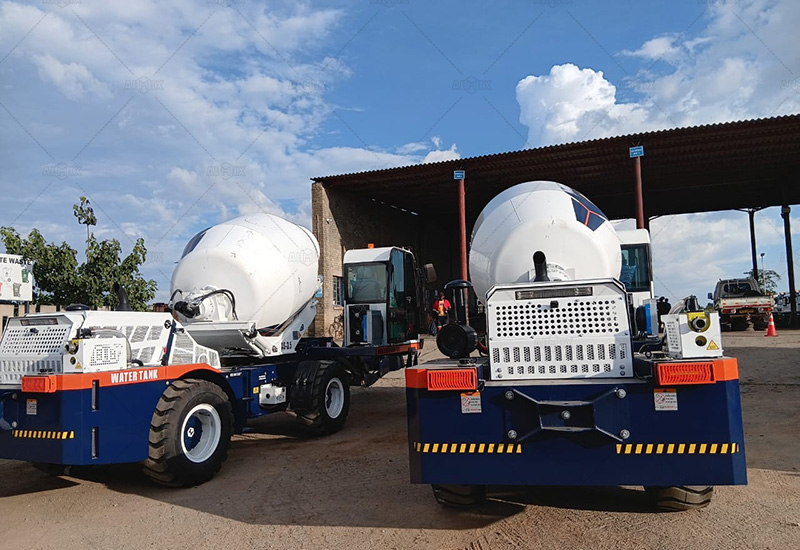
The cacophony of a construction site is a symphony of mechanical effort, yet within this orchestrated chaos, the operator of a self loading mixer has historically performed a precarious ballet. Manipulating a panoply of levers, pedals, and switches to govern the drum, the loading arm, and the water metering system demanded a level of manual dexterity that bordered on the acrobatic. This intricate choreography, while effective, was rife with opportunities for error, fatigue, and diminished productivity. The advent of integrated one-joystick control represents a tectonic shift in this paradigm, a profound simplification that distills a constellation of actions into a single, intuitive axis of command. It heralds an era where the operator transcends the role of a mere machine handler to become a conductor of efficiency, navigating the complexities of concrete production with an almost preternatural fluidity and precision.
The Ergonomic Imperative
Human factors have long been the silent arbiter of operational efficiency. The traditional control layout, with its disparate levers scattered across the operator’s cabin, was a veritable minefield of cognitive dissonance. Operators were forced to engage in a constant visual and physical recalibration, dividing their attention between the loading bucket, the rotating drum, and the myriad of gauges. This fragmentation of focus did not merely slow down the workflow; it precipitated physical strain and exacerbated the likelihood of operator fatigue, a critical factor in the high-temperature, high-stakes environments typical of the industry.
Reducing Cognitive Load
The genius of the integrated joystick lies in its ability to reduce cognitive load. By channeling multiple hydraulic functions through a single ergonomic interface, the control system leverages the brain’s innate capacity for motor coordination. The operator no longer needs to consciously deliberate over which lever corresponds to which function; the movements become reflexive, a subconscious extension of intent. This transition from declarative to procedural memory allows for a smoother, more continuous workflow, minimizing the disruptive pauses that plague multi-lever operations. The result is a seamless rhythm of loading, mixing, and discharging that feels less like work and more like a kinetic art form.

Mitigating Ergonomic Hazards
The physical toll of constant lever manipulation is often underestimated. Repetitive strain injuries and the muscular fatigue of maintaining awkward postures are common afflictions among operators of older machinery. The one-joystick configuration on the large concrete mixer, designed with the principles of anthropometrics in mind, allows the operator to maintain a natural, relaxed posture. The wrist and forearm execute the nuanced movements, while the rest of the body remains comfortably supported. This ergonomic consideration is not merely a matter of worker comfort; it translates to sustained vigilance and accuracy over extended shifts, directly impacting the consistency of the concrete mix and the longevity of the operator’s career.
Precision Through Digital Synergy
The simplification of physical controls is merely the superficial benefit. Beneath the surface, the one-joystick system is intricately linked to the machine’s digital nervous system, allowing for a level of precision that was previously unattainable. The mechanical linkages of yesteryear have been replaced by proportional hydraulic valves and sophisticated sensors, all orchestrated by a central processing unit. This synergy transforms raw mechanical power into a finely calibrated instrument of production, enabling the operator to execute complex maneuvers with finesse.
The Proportional Advantage
The most profound difference lies in the proportional control of the auxiliary functions. Whereas traditional levers often operated in a binary fashion—on or off—the modern joystick transmits the amplitude of the operator’s input. A slight deflection of the grip yields a deliberate, unhurried movement of the loading arm; a more aggressive sweep triggers a swift and dynamic response. This proportional feedback allows for the precise metering of material flow into the drum, mitigating the risk of spillage and ensuring an optimal ratio of aggregates to cementitious material. It fosters a “feeling” for the machine that transcends the mere mechanical, allowing the operator to gauge the consistency of the mix by the responsiveness of the controls.
Integrated Water Management
One of the most critical variables in concrete production is the water-to-cement ratio. In a one-joystick system, this function is elegantly integrated. Often, a trigger or a thumb-actuated rocker switch allows the operator to micro-dose water into the rotating drum concurrently with loading. This real-time control eliminates the delays associated with flipping separate switches, ensuring that the mixing process begins immediately upon material entry. The ability to make on-the-fly adjustments based on the visible consistency of the wet mix is a significant advantage, reducing the margin for error and enhancing the homogeneity of the final product.

Efficiency and the Streamlined Workflow
Ultimately, the adoption of integrated joystick control is an exercise in efficiency. It collapses the time required to execute a complete load cycle, from the initial scooping of raw materials to the precise discharge into formwork or a pump. The reduction in cycle time is not merely incremental; it is transformative, enabling a single machine to produce a higher volume of consistent concrete within a given shift.
Accelerating the Loading Cycle
The loading process is a high-stakes operation where proximity and speed must be balanced with safety and accuracy. With the one-joystick, the operator can orchestrate the descent of the loading arm, the engagement of the bucket, and the retraction of the arm in a single, fluid movement. This agility is particularly pronounced in tight quarters or when loading from stockpiles with varying consistency. The integrated control allows for the rapid repositioning of the bucket to capture the ideal material, reducing the number of “stabs” required to fill the drum and conserving both fuel and tire wear.
Unloading with Grace
Discharge is the culmination of the production cycle, and its precision dictates the success of the pour. The one-joystick’s control over the drum rotation and tilt allows for a variable speed of discharge, matching the requirement of the pour. Whether directing a steady stream into a narrow footing or a rapid fill for a large slab, the operator commands the flow with dexterity. This eliminates the jerky, stop-start motions that often plague conventional concrete mixers, reducing the risk of aggregate segregation and ensuring that the concrete arrives at its destination with its integrity intact.
Conclusion: A Paradigm of Simplicity
The evolution from a multitude of levers to a single, integrated joystick is a testament to the power of design thinking. It is a shift from complexity to clarity, from brute force to finesse. For the contractor, this translates to a more productive asset, a safer worksite, and a higher quality end product. For the operator, it means a reduction in stress and an enhancement of capability. The one-joystick control is not just a simplification; it is a redefinition of what is possible with a self-loading mixer, empowering the user to operate at the nexus of speed, precision, and human ingenuity.
Comments
No comments yet. Be the first to react!