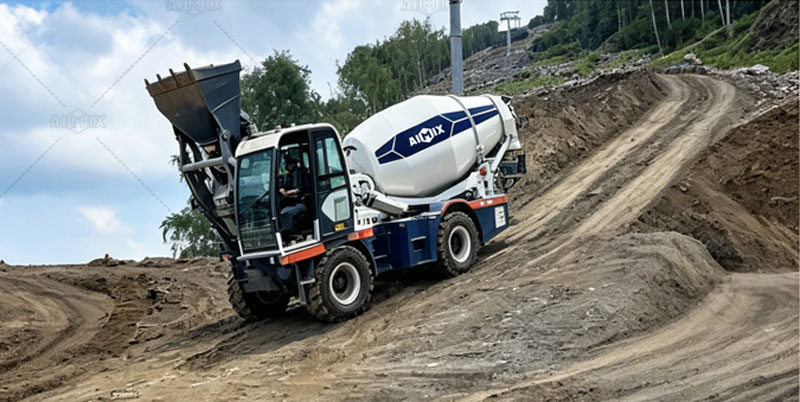
Infrastructure development can reshape the market for concrete equipment in ways that are not immediately visible from a machine specification sheet. In Ghana, roads, drainage systems, bridges, housing developments, commercial buildings, industrial facilities, and public infrastructure projects create different patterns of concrete demand. A contractor working on a short urban drainage project may need a very different mixing arrangement from a company supplying concrete for a long highway project. These differences influence equipment configuration, production capacity, mobility, transportation, and ultimately the concrete mixer machine price in Ghana.
Price is therefore not determined by machine size alone. Import costs, shipping arrangements, project duration, concrete volume, site accessibility, equipment utilization, and the required level of automation can all affect the purchasing decision. When infrastructure activity increases, demand for certain equipment configurations may also change. Understanding this relationship helps contractors distinguish between a higher purchase price caused by additional capability and a higher price that does not provide practical value for the project.
Infrastructure Project Types Create Different Concrete Demand Patterns
Road Projects Require Mobility Across Multiple Work Areas
Road construction rarely concentrates all concrete work at one permanent location. Culverts, drainage channels, bridge approaches, kerbs, foundations, and roadside structures can appear at different points along the alignment. Equipment that can move between these work fronts may therefore have greater practical value than a machine designed solely for fixed-site production.
Urban Infrastructure Creates Space and Access Constraints
Market infrastructure projects in Accra, Kumasi, Takoradi, and other growing urban areas can involve congested roads and restricted construction compounds. Concrete equipment must often operate within a limited footprint while avoiding interference with traffic and other trades. Compact machinery, flexible discharge arrangements, and easier relocation can consequently influence purchasing decisions and market prices.

Large Projects Can Favor Higher Utilization
A machine with a higher acquisition price may become more economical to operate when it remains productive throughout a long construction program. Large road, bridge, industrial, or housing projects can provide enough concrete demand to justify greater production capacity. The relevant comparison is therefore not simply purchase price, but the relationship between equipment cost and expected utilization over the project period.
Concrete Equipment Demand Changes With Project Scale
Small Projects Often Need Flexible Concrete Production
Smaller infrastructure contractors may not require a large stationary concrete production system. Their projects can involve foundations, drainage works, small bridges, residential developments, or localized road improvements where concrete demand fluctuates from day to day. In these conditions, a self loading concrete mixer for sale can provide an alternative by combining aggregate loading, weighing, mixing, and concrete transport within one machine.
Larger Projects May Justify Higher-Capacity Systems
When a project requires substantial quantities of concrete over an extended period, production capacity becomes more influential. Contractors may consider batching plants, multiple mixers, or other centralized production arrangements. These systems can require greater initial investment, site preparation, aggregate storage, and transportation planning, but their suitability depends on whether the project can sustain the required production rate.
Equipment Configuration Influences the Final Price
Two machines with similar mixing capacities can have noticeably different prices because their configurations are not identical. Engine selection, hydraulic components, weighing systems, drive configuration, discharge design, cabin equipment, and optional automation can all alter the equipment package. Contractors should therefore compare the complete configuration rather than using capacity as the only purchasing benchmark.
Project Location Can Influence the Delivered Equipment Cost
Transport Distance Adds More Than the Basic Machine Price
Equipment purchased for a Ghanaian infrastructure project may involve inland transportation, port handling, customs procedures, local delivery, and commissioning. A machine that appears inexpensive at the factory can have a different delivered cost once logistics are included. Project location therefore matters, especially when construction sites are far from major transport corridors.
Site Mobility Can Reduce Secondary Equipment Requirements
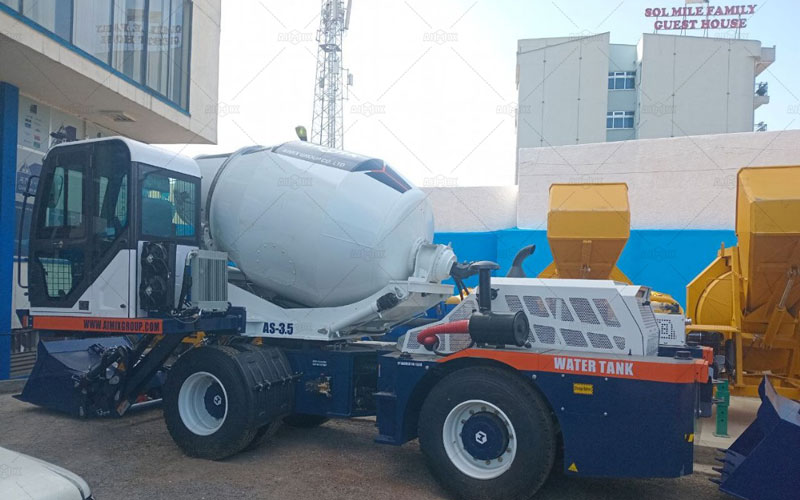
Some projects need concrete production at several locations rather than at one permanent plant. A self loading mini concrete mixer for sale in Ghana may attract contractors who want to move production between work areas without establishing a conventional batching site at every location. The machine’s mobility can become part of the economic calculation because it may reduce dependence on additional material-handling equipment and repeated concrete transportation.
Remote Projects Put Greater Weight on Equipment Independence
Infrastructure projects outside major urban centers can face longer material-supply routes and less predictable access to ready-mixed concrete. Producing concrete closer to the work area can change the logistics equation. However, the contractor still needs to account for aggregate supply, cement storage, water availability, fuel, operator requirements, maintenance, and movement between sites.
How Infrastructure Demand Shapes Mixer Purchasing Decisions
Contractors Should Compare Price With Expected Utilization
Infrastructure activity can make equipment demand more project-specific. A contractor with several upcoming projects may evaluate a machine according to its expected working hours across multiple contracts rather than the requirements of a single job. Higher utilization can make a more capable machine easier to justify, while irregular project schedules may favor a simpler and more mobile configuration.
Market Demand Does Not Make Every Expensive Machine Suitable
Growing infrastructure investment can increase demand for concrete machinery, but market activity should not be treated as a reason to purchase the largest available model. A machine that exceeds the project’s concrete requirement may spend substantial time idle. Conversely, an undersized machine can constrain production and create delays. Capacity should remain connected to actual concrete volume, working hours, site conditions, and future project opportunities.
Future Projects Can Change the Calculation
For contractors operating across multiple infrastructure contracts, equipment selection can include anticipated future workloads. A machine capable of handling several project types may have greater utility than one optimized for a single application. This is particularly relevant when projects vary between road construction, drainage, housing, commercial development, and small public works.
The relationship between Ghana’s infrastructure market and concrete mixer prices is therefore shaped by several interacting variables. Project scale affects required capacity; project location affects logistics; site conditions affect mobility; and expected utilization affects the value of different configurations. Instead of treating concrete mixer machine price in Ghana as an isolated figure, contractors can evaluate the machine against the concrete demand, operating environment, transportation requirements, and workload it is expected to serve. That approach provides a clearer basis for comparing equipment packages as Ghana’s infrastructure construction market continues to evolve.
Comments
No comments yet. Be the first to react!