The operational efficacy of self-loading concrete mixers is intrinsically linked to ambient weather conditions, which exert profound influence on both mechanical performance and material properties. These versatile machines, designed for autonomous operation across diverse construction environments, must contend with meteorological variables that can significantly alter their functional parameters. Temperature extremes, precipitation patterns, humidity levels, and wind conditions collectively create a complex operational matrix that demands sophisticated adaptation strategies. The interplay between environmental factors and equipment performance extends beyond simple operational adjustments to encompass fundamental material science principles governing concrete hydration and curing dynamics. Understanding these relationships is paramount for optimizing productivity, ensuring structural integrity, and maintaining operational safety in variable climatic conditions.
## Thermal Dynamics and Temperature Regulation
Ambient temperature constitutes the most critical environmental variable affecting
self loading concrete mixer operations, with both high and low extremes presenting distinct challenges. In elevated temperature conditions exceeding 30°C, the hydration reaction accelerates exponentially, reducing concrete workability and setting time by up to 50%. This thermal acceleration necessitates precise adjustments to mixing cycles, with reduced transit times and increased water addition to maintain slump retention. The mechanical systems of the mixer itself face thermal stress, as hydraulic fluids can exceed optimal viscosity ranges, potentially compromising power transmission efficiency. Engine cooling systems must work at maximum capacity to prevent overheating, while electronic control systems may experience thermal drift in sensor calibration, affecting batching accuracy.
Conversely, low temperature operations below 5°C introduce a different set of challenges centered on thermal management. Concrete hydration slows dramatically, with setting times doubling for every 10°C drop in temperature below 20°C. This retardation effect requires active heating of mixing water and aggregates to maintain proper curing kinetics. The mixer’s hydraulic system faces increased fluid viscosity, demanding pre-heating cycles before operation to ensure responsive control. Steel components become more brittle, increasing the risk of mechanical failure under stress. Water management systems require freeze protection, with heated water tanks and insulated piping becoming essential for continuous operation. The thermal mass of the concrete itself becomes a heat sink, requiring careful calculation of energy input to maintain optimal placement temperature.
## Hydrological Considerations and Moisture Management
Precipitation and humidity levels directly impact the moisture content of raw materials, creating complex challenges for concrete quality control. In high humidity environments exceeding 80% relative humidity, aggregates absorb atmospheric moisture, altering their effective water content by 2-5%. This moisture variation necessitates real-time adjustments to the water-cement ratio, requiring sophisticated moisture sensors integrated into the mixer’s control system. Without precise compensation, the concrete strength can deviate by up to 15% from design specifications, compromising structural integrity. The increased moisture content also promotes material adhesion to mixer drums and conveying systems, potentially reducing operational efficiency through increased cleaning cycles and material waste.
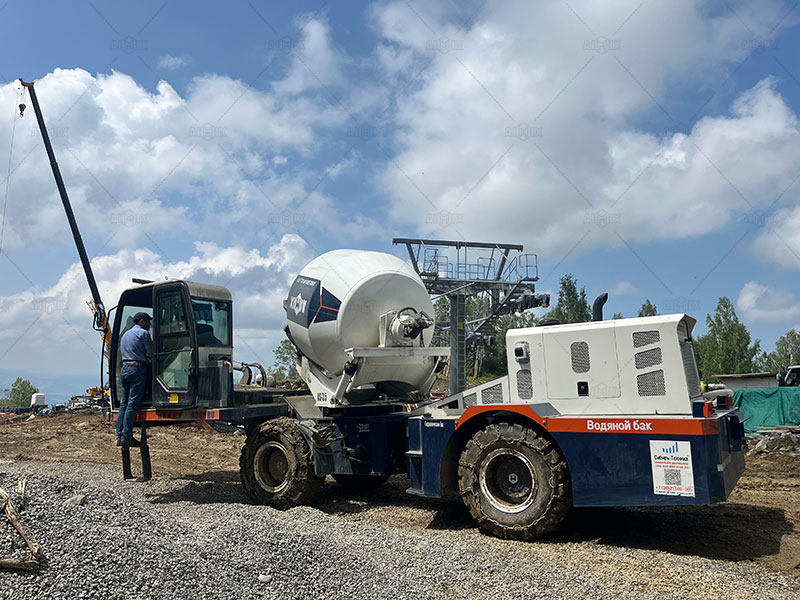
Rainfall during operations presents immediate challenges to both material quality and site accessibility. Even moderate precipitation of 5mm per hour can increase the water-cement ratio of exposed aggregates by 3-7%, fundamentally altering concrete properties. [Self loading concrete mixture](https://aimixconcretesolution.com/self-loading-concrete-mixer/
) operating in wet conditions require enhanced sealing of electrical components and hydraulic systems to prevent moisture ingress and corrosion. Site terrain management becomes critical, as saturated ground conditions can reduce the traction and stability of wheeled mixers, potentially leading to operational hazards. The moisture sensitivity of cementitious materials demands proactive weather monitoring and scheduling flexibility to avoid concrete placement during precipitation events, as remediation of water-affected concrete is both technically challenging and economically costly.
## Atmospheric Conditions and Aerodynamic Effects
Wind velocity and atmospheric pressure variations create operational challenges that extend beyond simple weather protection. High wind conditions exceeding 25 km/h significantly increase evaporative water loss from freshly mixed concrete, potentially reducing slump by 20-40% within 30 minutes of exposure. This rapid moisture evaporation necessitates the use of windbreaks or misting systems to maintain concrete workability. The aerodynamic profile of self-loading
concrete mixers, with their elevated loading arms and discharge chutes, makes them susceptible to wind-induced instability, requiring operational shutdowns during severe wind events for safety considerations. Dust generation from dry aggregate handling increases exponentially with wind speed, demanding enhanced dust suppression systems to maintain environmental compliance.
Atmospheric pressure variations, particularly in high-altitude operations, affect both mechanical and material performance. The reduced air density at altitudes above 2,000 meters decreases engine combustion efficiency, potentially reducing power output by 15-25% for naturally aspirated diesel engines. This power reduction impacts loading capacity and mixing efficiency, requiring derating of operational parameters. The lower atmospheric pressure also accelerates water evaporation from concrete mixtures, necessitating adjustments to mixing procedures and water addition rates. The combined effects of wind, atmospheric pressure, and altitude create a complex operational environment that demands sophisticated monitoring and adaptive control systems to maintain consistent concrete quality and equipment performance across varying atmospheric conditions.
The operational envelope of self-loading concrete mixers is therefore defined by the intersection of these environmental parameters, with optimal performance requiring continuous monitoring and dynamic adjustment of both mechanical systems and material formulations. The development of integrated weather monitoring and adaptive control systems represents the next frontier in optimizing these machines for reliable operation across the full spectrum of environmental conditions encountered in modern construction projects.
Comments
No comments yet. Be the first to react!