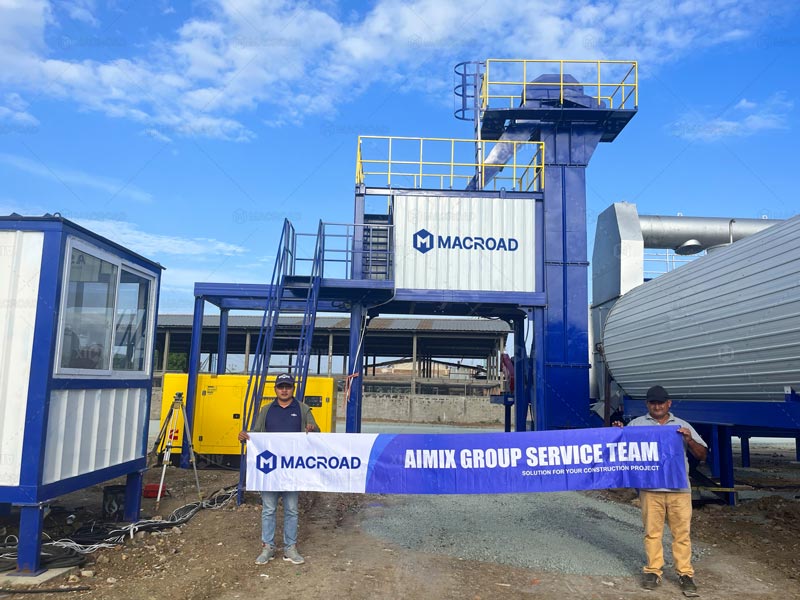
The long-term performance of highways across Latin America depends not only on material quality and construction practices, but also on the internal stability of the asphalt mixing process itself. Whether the project is in Colombia’s mountainous corridors, Brazil’s logistics corridors, or Mexico’s expanding urban networks, the consistency of mix production inside the asphalt mixing plant directly affects pavement strength, service life, and maintenance costs.
In practice, contractors often focus on output capacity and the price of asphalt plant equipment, but mixing stability is an equally critical performance indicator. An unstable asphalt mixing plant(planta de aglomerado asfaltico) can produce asphalt that meets specifications on paper but fails prematurely under traffic loads and environmental stress. Understanding how mixing stability affects pavement durability is essential for making informed investment and operational decisions.
Why Mixing Stability Matters for Pavement Performance
Mixing stability refers to the ability of an asphalt mixing plant to consistently produce asphalt mixtures with uniform aggregate coating, accurate binder content, stable temperature, and repeatable gradation over long production runs. Even small fluctuations in these parameters can lead to significant differences in pavement behavior over time.
Uniform Binder Distribution and Aggregate Coating
A stable asphalt mixing plant ensures that each aggregate particle is evenly coated with asphalt binder. Inconsistent mixing results in some aggregates being overcoated while others remain partially dry. Overcoated particles can cause bleeding and rutting, while undercoated particles increase the risk of moisture damage and raveling.
In Latin America, where highways often experience heavy freight traffic, intense rainfall, and temperature variations, uniform coating is essential to maintain structural integrity and prevent early surface deterioration.
Temperature Stability During Mixing
Mix temperature is another core element of mixing stability. Excessively high temperatures accelerate binder aging, while low temperatures reduce workability and compaction quality. A well-calibrated asphalt mixing plant maintains stable discharge temperatures even under changing ambient conditions, fuel quality, and material moisture levels.
In regions such as the Andes or tropical lowlands, where environmental conditions vary significantly, temperature stability inside the asphalt mixing plant becomes a decisive factor in long-term pavement durability.
How Mixing Stability Affects Highway Durability
The relationship between mixing stability and highway durability is direct and measurable. Poor mixing stability does not usually cause immediate failure, but it significantly shortens pavement life by accelerating common distress mechanisms.
Resistance to Cracking and Fatigue
Inconsistent binder distribution weakens the asphalt matrix, reducing its ability to absorb traffic-induced stress. Over time, this leads to fatigue cracking, reflective cracking, and structural breakdown. A stable asphalt mixing plant produces a homogeneous mixture that distributes loads evenly, improving resistance to both thermal and fatigue cracking.
This is particularly important for highways in high-altitude regions of Colombia and Peru, where thermal cycling places additional stress on pavement layers.
Rutting and Deformation Control
Rutting is often associated with excessive binder content, poor aggregate interlock, or temperature instability during production. When mixing stability is compromised, binder-rich zones form within the pavement, increasing susceptibility to permanent deformation under heavy axle loads.
A well-designed and properly operated asphalt mixing plant minimizes these risks by maintaining consistent mix composition and temperature, thereby improving rutting resistance and structural stability.
Moisture Damage and Long-Term Durability
Moisture damage is one of the most common causes of premature pavement failure in Latin America, where rainfall and humidity levels are high in many regions. Poor mixing stability increases the likelihood of incomplete aggregate coating, creating pathways for water infiltration and stripping.
By contrast, a stable asphalt mixing plant ensures strong binder-aggregate adhesion, reducing moisture susceptibility and extending pavement service life.
Mixing Stability and Plant Design Considerations
Mixing stability is not achieved by chance; it is the result of plant design, control systems, maintenance practices, and operator competence.
Control Systems and Automation
Modern asphalt mixing plants are equipped with advanced automation systems that regulate aggregate feed rates, binder injection, mixing time, and temperature control. These systems reduce human error and improve production consistency across long operating shifts.
Plants without automated controls often struggle to maintain stable mixing conditions, particularly when raw material properties fluctuate. Investing in automation may increase the initial price of asphalt plant(precio de planta de asfalto) equipment, but it significantly improves long-term production quality and reduces operational risk.
Mixer Configuration and Mixing Time
The design of the mixer itself—whether twin-shaft, pugmill, or drum-based—plays a critical role in mixing stability. Adequate mixing time and effective material circulation ensure uniform coating and consistent gradation.
In batch-type asphalt mixing plants, precise control over mixing cycles allows for high consistency, while continuous drum systems require careful calibration to maintain uniformity across variable production rates.
Maintenance and Wear Management
Mixer paddles, liners, and blades experience continuous wear, which affects material flow patterns and mixing efficiency. Worn components reduce mixing effectiveness, leading to segregation and uneven binder distribution.
A preventive maintenance program focused on critical mixing components is essential for preserving mixing stability and protecting pavement quality. Neglecting maintenance may reduce upfront costs but ultimately increases the life-cycle cost of both the asphalt mixing plant and the constructed highway.
Economic Implications of Mixing Stability
While contractors often prioritize the price of asphalt plant equipment, mixing stability has a far greater impact on total project cost and long-term asset value.
Life-Cycle Cost vs. Initial Plant Investment
A lower price of asphalt plant equipment may appear attractive, but if the plant lacks stable mixing performance, the resulting pavement may require frequent maintenance, rehabilitation, or premature replacement. These downstream costs often exceed the initial savings achieved during procurement.
Conversely, investing in a higher-quality asphalt mixing plant with proven mixing stability reduces maintenance costs, extends pavement service life, and improves return on investment across multiple projects.
Productivity and Operational Efficiency
Mixing instability leads to rejected batches, production interruptions, and inconsistent output quality, all of which reduce plant productivity. These inefficiencies increase fuel consumption, labor costs, and material waste.
A stable asphalt mixing plant delivers predictable output, allowing contractors to plan logistics, paving schedules, and labor deployment more effectively, particularly on large-scale highway projects.
Regional Context: Asphalt Plant Performance in Colombia and Latin America
Colombia represents a microcosm of Latin America’s asphalt production challenges. Diverse climates, mountainous terrain, variable aggregate sources, and rapidly expanding road networks demand high levels of mixing stability.
An asphalt plant Colombia(planta de asfalto Colombia) contractors rely on must perform consistently across altitudes, temperatures, and material qualities. This makes mixing stability not just a technical preference but a strategic necessity for infrastructure development in the region.
Across Latin America, governments and private developers increasingly emphasize performance-based specifications, durability standards, and life-cycle cost efficiency. In this context, the operational stability of the asphalt mixing plant becomes a core criterion for plant selection and project approval.
Practical Strategies to Improve Mixing Stability
Improving mixing stability does not require radical changes but rather systematic technical and operational discipline.
Key practices include:
- Regular calibration of weighing systems and binder pumps.
- Monitoring mix temperature and adjusting heating systems proactively.
- Implementing quality control testing at regular intervals during production.
- Training operators to recognize early signs of instability, such as temperature drift, segregation, or abnormal material flow.
These practices apply equally to new plants and existing installations seeking to improve performance and durability outcomes.
Building Durable Highways Through Stable Asphalt Mixing
Durable highways are not built solely on the jobsite; they begin inside the asphalt mixing plant. Mixing stability determines whether the pavement will resist cracking, rutting, and moisture damage over decades of service or deteriorate prematurely under environmental and traffic stress.
By prioritizing mixing stability alongside considerations such as plant capacity, automation level, and price of asphalt plant equipment, contractors and project owners can achieve superior pavement performance and long-term economic efficiency.
For regions such as Colombia and the broader Latin American market, where infrastructure demand is rising and performance expectations are increasing, the asphalt mixing plant is no longer just a production asset—it is a strategic investment in national mobility, safety, and economic development.

Comments
No comments yet. Be the first to react!