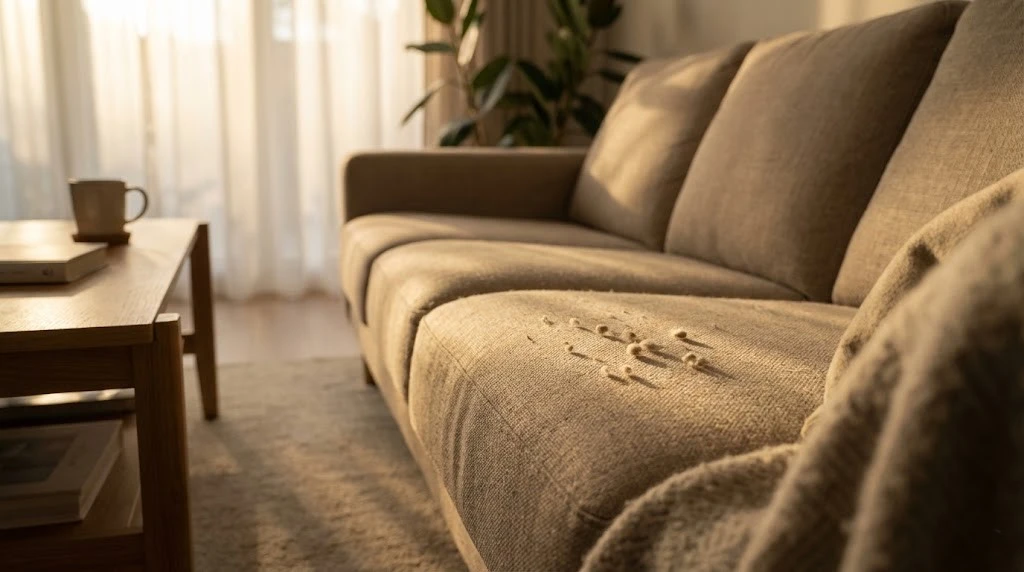
You’ve probably noticed it before: tiny, fuzzy balls forming on the surface of your sofa. Maybe you first saw them on the seat cushion, or perhaps it was a rough patch on the armrest. From afar, the fabric might still look okay, but up close, it feels worn and less inviting. This is fabric pilling, and it’s a common issue that many sofa owners face.
Pilling can be frustrating, especially when it appears on expensive or brand-new sofas. However, it doesn’t always mean that the fabric is of poor quality. Understanding the causes of pilling can help you determine the best course of action—whether it’s a simple fix or a more involved solution like reupholstering your sofa.
The Science Behind Fabric Pilling
Pilling occurs when loose fibers migrate to the surface of the fabric. These fibers are pulled out by friction and twisted together, forming small knots or “pills” that cling to the surface. Sofas are particularly susceptible to pilling due to the constant motion involved in daily use. People sit, shift, slide, and rub their arms against the fabric, creating friction in the same spots repeatedly.
It’s important to note that pilling is not the same as thinning or tearing. The fabric underneath is usually still intact. What you’re seeing is a surface issue, not a structural failure.
Why Some Fabrics Pill More Than Others
Not all fabrics are created equal when it comes to pilling. The likelihood of pilling depends on the fiber type, yarn twist, and weave. Short fibers are more prone to pilling than long ones because they break loose more easily. Once loose, these fibers tangle on the surface instead of falling away. This is why some cottons and synthetics pill more than wool or linen, which have longer fibers.
Blended fabrics, which combine natural fibers with synthetics like polyester, are also prone to pilling. The synthetic fibers tend to hold onto loose pills instead of letting them shed, making the pills more noticeable and longer-lasting. Loose weaves and soft textures add to the problem. Fabrics that feel cozy and brushed often pill more than tight, flat weaves. Comfort and durability don’t always go hand in hand.
The Role of Friction and Pressure
Pilling typically appears in high-contact areas such as seat centers, front edges, and armrests. This isn’t random wear; it’s predictable. If one seat is used more frequently, it will pill faster than the others. Cushions that aren’t rotated wear unevenly, making pilling more noticeable. This is why two sofas with the same fabric can age differently depending on how they’re used.
Why New Fabric Can Pill Early
One of the biggest surprises for sofa owners is early pilling. A sofa that pills within months can feel defective, but in many cases, it isn’t. New fabric often sheds excess surface fibers during early use, a process sometimes called “fuzzing.” Once these loose fibers are gone, the fabric can stabilize and pill less over time. This early phase doesn’t mean the fabric will keep deteriorating; it just means the surface needs some maintenance before it settles.
Is Pilling a Sign of Poor Quality?
Not always. Some very durable fabrics pill, while some cheap fabrics don’t. Abrasion resistance and pilling resistance are related but not identical. A fabric can score high on abrasion tests and still pill because the fibers are strong but short. Another fabric may resist pilling but wear thin faster. It’s a trade-off.
That said, extreme or continuous pilling can indicate a mismatch between fabric choice and use. A delicate weave on a heavily used family sofa is more likely to disappoint. This is something experienced sofa upholstery services consider when recommending materials.
What You Can Do to Fix Pilling
The good news is that pilling is often fixable, at least cosmetically. Fabric shavers and pill removers work well when used gently. They cut pills off the surface without pulling fibers. The key is light pressure and patience. Rushing can damage the weave underneath. Avoid scissors, as they’re hard to control and can snip the fabric itself.
Vacuuming with a soft brush attachment also helps. It removes loose fibers before they form pills and keeps the surface cleaner overall. Regular, gentle maintenance does more than one aggressive fix.
What Not to Do
Don’t pull pills off by hand. That tugs at the fabric and loosens more fibers, making the problem worse. Don’t use sticky lint rollers aggressively, as they can lift fibers and speed up pilling. And avoid scrubbing hard with brushes meant for carpets. Upholstery fabric is more delicate than it looks.
When Pilling Keeps Coming Back
If you remove pills and they return quickly, there’s usually an underlying issue. Either the fabric continues to shed fibers, or friction is concentrated in one area. Rotating cushions can help, as can changing seating habits if that’s realistic. Adding throws to high-contact spots can reduce direct friction and slow future pilling. If the sofa is still comfortable and structurally sound, these small changes can extend its usable life.
When Reupholstery Becomes the Better Option
Sometimes pilling is part of a bigger picture. If the fabric pills heavily, looks dull, and feels rough, it may not be the right material for your lifestyle. This is where sofa reupholstery makes sense. Replacing the fabric doesn’t just improve appearance; it gives you a chance to choose a weave and fiber better suited to daily use.
A professional assessment can tell you whether the issue is surface-level or inherent to the fabric. Good sofa upholstery services won’t push reupholstery if simple fixes will do. They’ll explain the trade-offs clearly.
Choosing Fabrics That Pill Less Next Time
No fabric is completely pill-proof, but some resist it better. Tight weaves pill less than loose ones, and longer fibers pill less than short ones. Fabrics with a smooth surface show less fuzz than brushed textures.
Performance fabrics are designed to balance durability and appearance. Many resist pilling well, though they feel different from natural fibers. When selecting fabric, ask about pilling resistance, not just color and texture. It’s a practical question that pays off later.
Managing Expectations
Even the best upholstery shows wear over time. Pilling is part of normal fabric life, especially in homes where sofas are used daily. The goal isn’t perfection; it’s longevity. A fabric that pills slightly but stays structurally sound is often a better investment than one that looks smooth but wears thin quickly. Understanding this balance helps avoid frustration.
The Bottom Line
Fabric pilling happens because of fibers, friction, and use—not because you did something wrong. In many cases, it’s cosmetic and manageable with the right tools and habits. Gentle removal, cushion rotation, and regular care go a long way. When pilling becomes constant or the fabric no longer suits your needs, sofa reupholstery offers a practical reset. Good sofa upholstery services focus on matching fabric to real life, not just showroom appeal. With the right choices, pilling becomes a minor maintenance issue instead of a deal-breaker.
Comments
No comments yet. Be the first to react!