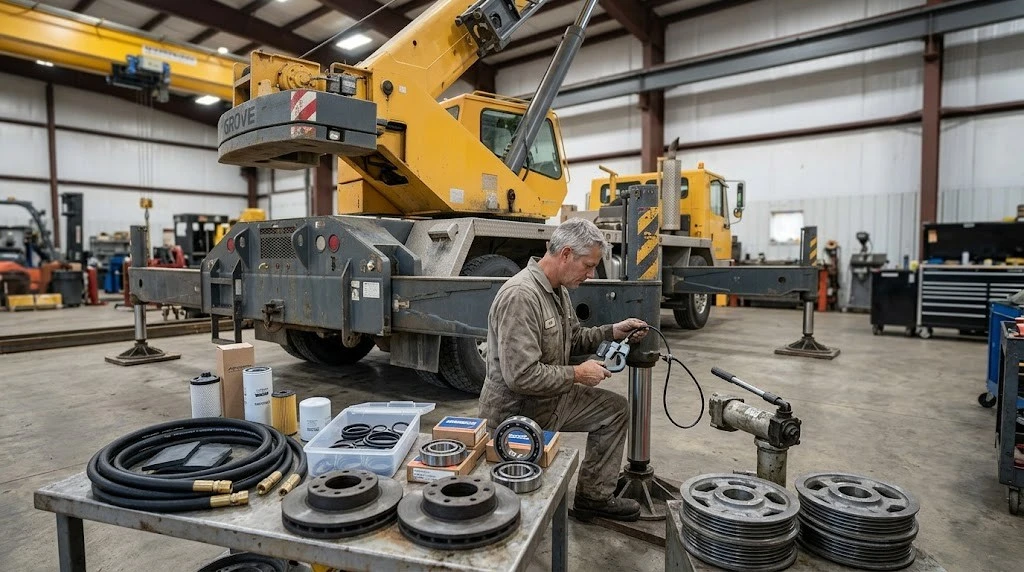
Grove cranes have built a legacy of toughness that spans decades. These machines absorb workloads that would destroy less capable equipment. Veterans who operate older models carry this knowledge in their bones. The engineering philosophy of earlier generations prioritized mechanical simplicity and strength. Even the most robust construction, however, yields to the cumulative effect of operating hours. Parts simply wear out.
Fleet managers who sustain aging Grove cranes understand the ongoing cycle. Locating suitable replacements becomes a persistent operational task. Identifying which components fail most frequently provides genuine strategic value. It enables predictive maintenance rather than crisis-driven repairs. Let’s examine the items most commonly ordered for older Grove machines. Keeping a ready inventory of essential crane parts on your shelf minimizes costly operational disruptions.
Hydraulic System Components
Hydraulic systems generate the mechanical force behind every lift and extension. Sustained heat exposure and pressure fluctuations gradually erode their integrity. Minor seepage develops at fittings and connections. Then system pressure falters during peak demand cycles. Seals are the customary first casualties. Polymer formulations stiffen from prolonged thermal aging. Surface cracking appears, and hydraulic efficiency declines measurably.
Seal replacement by itself seldom restores full function. Cylinders typically require comprehensive service as well. Hardened rod surfaces accumulate longitudinal scoring marks. Barrel bores show oval wear patterns from sustained piston movement. Installing replacement hydraulic cylinders is routine for machines with substantial operating history.
Pumps constitute another predictable failure source. They operate under severe duty without rest. A pump that vibrates excessively or delivers diminished flow has reached its service limit. Pumps and cylinders appear consistently among the most-ordered crane parts for units exceeding 10,000 hours. Hydraulic hoses merit regular inspection schedules. Outer wire braids deteriorate from abrasion and chemical exposure. A catastrophic hose rupture brings immediate shutdown. Maintaining inventory of high-pressure hydraulic hoses is operational prudence.
Load Moment Indicator (LMI) Systems
The Load Moment Indicator functions as the essential safeguard against overload. On aging cranes, these electronic protectors become progressively less dependable. Contemporary LMI systems incorporate capabilities unavailable in earlier designs. Legacy systems on older machines continue their vital protective role. Replacement components for them grow scarcer with each passing year.
Electrical system aging drives the majority of failures. Wire insulation abrades against structural brackets and fasteners. Terminal connections corrode from atmospheric moisture and salt. Sensor readings drift and fluctuate unpredictably. Display units occasionally fail to activate entirely. Technicians routinely order replacement wiring harnesses, load cells, and boom angle sensors.
Primary console failures create the most significant sourcing difficulties. Tracking down a replacement LMI board for an older Grove model demands extensive supplier networking. Scheduled functional testing identifies degradation before catastrophic failure. If your display exhibits inconsistent or erratic readings, begin sourcing replacement Grove parts promptly.
Friction Discs and Brake Components
Older Grove cranes utilize mechanical brake and clutch mechanisms. These systems sacrifice friction material with every operational cycle. Friction discs are engineered as consumable components. You install fresh units. You consume their service life. You replace them on maintenance schedule. Aging machines typically accelerate their disc wear rates. Housings distort from thermal overload. Automatic adjusters exhaust their travel range.
A pedal that sinks progressively signals imminent failure. A brake that cannot secure a suspended load requires immediate equipment grounding. Direct friction material inspection determines actual condition. You’ll order friction discs, brake bands, and return springs. Brake drums occasionally score deeply enough to require machining or replacement.
Clutch plates follow an identical deterioration path. Slipping clutches under working loads create hazardous operating conditions. Thermal glazing transforms effective friction surfaces into polished, non-functional plates. Maintaining spare clutch plates and brake bands in your parts room demonstrates professional maintenance standards.
Swing Gearboxes and Bearings
The swing mechanism endures relentless rotational loading throughout operations. Moving heavy loads through circular paths generates tremendous forces. Gearbox shaft seals harden and lose resilience. Lubricant escapes past compromised seals. Abrasive particles and moisture invade the sealed housing.
Bearings absorb the most severe punishment. Swing bearings are massive and precision-engineered. They represent significant capital outlay. High-hour cranes inevitably develop measurable bearing play. Roughness or shudder during swing initiation indicates progressive wear. Excessive play compromises safe operation. Bearing replacement is a major undertaking requiring specialized equipment. It becomes mandatory when wear exceeds manufacturer specifications.
Planetary gear assemblies, shafts, and bearings for the swing drive require periodic renewal. These crane parts ensure smooth and controlled upper-structure rotation. Neglecting lubricant leakage accelerates internal damage and forces complete assembly replacement.
Control Valve Assemblies
Control valves serve as the hydraulic system’s command center. They route pressurized fluid to specific actuators. Internal spools wear from countless actuation cycles. Internal bypass leakage increases beyond tolerable limits. Joystick controls develop objectionable free play. Hydraulic response becomes sluggish and inaccurate. Uncommanded boom movement with controls at neutral indicates advanced valve deterioration.
Professional rebuilding provides temporary restoration. Fresh O-rings, backup rings, and seal kits restore performance for a service interval. Eventually, metal surfaces wear beyond practical repair. Spools score deeply enough that seal replacement cannot restore proper function. Complete valve assembly replacement becomes the only practical solution.
Locating exact replacement control valves for older Grove cranes requires meticulous attention. Part numbers must match precisely. Internal flow paths and porting must align. This is where knowledgeable suppliers of Grove parts demonstrate their expertise.
Outrigger Components
Outriggers establish the critical stability platform for every lift. They transfer the entire crane weight to the supporting ground. Pads compress and abrade from contact with abrasive surfaces. Exposed steel surfaces suffer corrosion in outdoor environments. Hardened pins elongate and develop oval wear profiles.
The hydraulic cylinders extending outrigger beams face severe contamination hazards. Dirt particles embed in rod surfaces during extension. Outrigger pads, beam reinforcement kits, and hardened pins appear frequently on parts orders. Beams occasionally deform or crack from overload. Corrosive atmospheres accelerate structural deterioration. Removing damaged sections and welding repair plates restores capacity.
Pin lubrication is absolutely essential maintenance. Dry pins seize solidly in their bores. Extraction becomes extremely difficult. Replacement pins and bushings are standard stock items for aging crane maintenance operations.
Engine and Drivetrain Parts
The engine powers every function on mobile crane configurations. Many vintage Groves were equipped with Cummins or Detroit Diesel engines. These powerplants enjoy well-deserved reputations for durability. They still require disciplined maintenance attention. Water pumps fail from seal and bearing deterioration. Alternators quit from internal electrical failures. Fuel injectors clog from fuel contamination. Belts, hoses, and filters require scheduled replacement.
Higher accumulated hours bring turbocharger and oil cooler replacement needs. Transmissions endure separate abuse from highway and jobsite operation. Clutch facings, seals, and bearings wear predictably. Rebuilt transmissions offer one procurement approach. Individual component sourcing provides cost flexibility.
Engine and drivetrain crane parts remain available through established channels when you identify the original manufacturer. Waiting for catastrophic failures before ordering is poor maintenance practice.
Boom Cables and Sheaves
The boom constitutes the crane’s primary lifting apparatus. Telescopic booms contain extension cables and sheaves under relentless operational wear. Cables develop broken outer wires and internal core fatigue. Sheaves groove from sustained cable contact pressure. Ignored wear progression leads to cable failure. A broken extension cable immobilizes boom telescoping function.
Replacement cable must match specifications exactly. Length, diameter, and lay direction tolerances are critical. Sheaves require replacement when groove wear exceeds acceptable limits. Sheave bearings fail and freeze solid. Frozen bearings destroy cables within short operating periods. Sheave assemblies, pivot pins, and bearings are common replacement requirements.
Internal wear pads between telescoping boom sections also degrade. These are typically high-performance polymer or composite materials. Worn pads allow direct metal contact between boom sections. Scoring, galling, and binding result. Proactive pad replacement before metal contact prevents expensive boom repairs. Boom components are among the most safety-critical Grove parts in the machine.
Keep Moving
Keeping a veteran Grove crane in productive service brings genuine professional satisfaction. These machines were engineered for demanding real-world conditions. They cannot indefinitely resist material fatigue and wear. Components reach their service limits. Systems degrade through normal operation. The key to extended operational life is systematic proactive maintenance.
You must learn to interpret early warning signs accurately. You must understand typical failure progression patterns. When you comprehend where aging cranes are most vulnerable, you can plan strategically. You can maintain adequate stocks of critical crane parts. You can perform maintenance during scheduled windows rather than emergency shutdowns.
Sourcing dependable Grove parts requires diligence and good supplier relationships. Partner with specialists who understand these machines thoroughly. Provide accurate model, serial, and specification data. Verify every detail before placing orders. A properly maintained older Grove crane can continue delivering reliable, productive service for many additional years.
Comments
No comments yet. Be the first to react!