A batch pyrolysis project can offer a practical investment pathway for projects that do not have the feedstock volume or capital budget required for a large continuous facility.
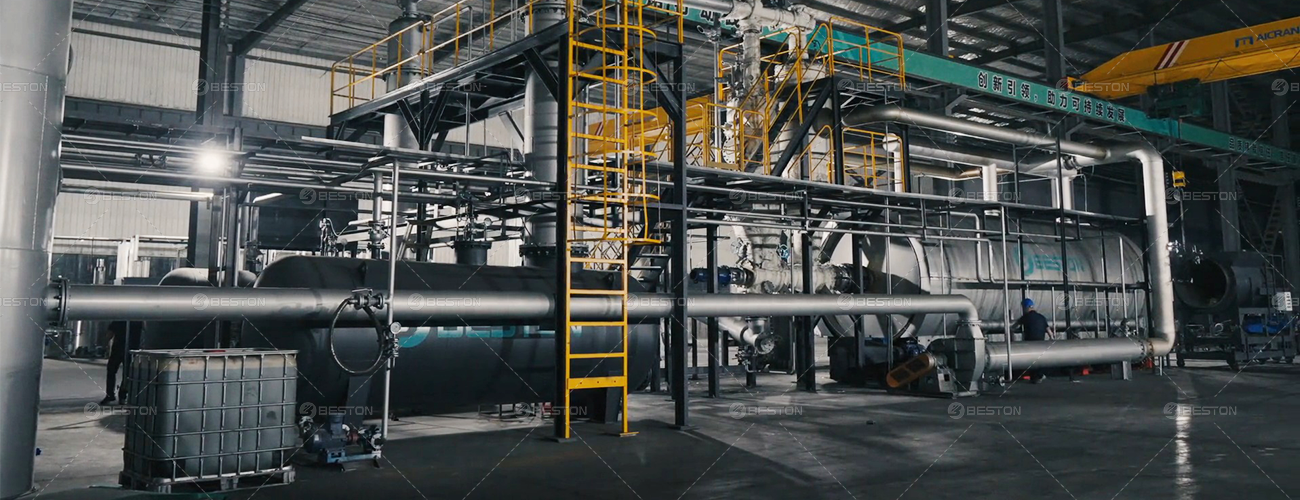
The equipment configuration is generally more modular. A typical batch system consists of a reactor, heating system, gas handling unit, condensation system, product collection equipment, and emission control equipment. The relatively straightforward process architecture can reduce the initial capital burden compared with a highly automated continuous plant.
This makes batch pyrolysis particularly relevant for small and medium-scale waste treatment projects where the priority is to establish processing capacity without committing excessive capital at the outset.
Flexible Capacity for Variable Feedstock Supply
Feedstock availability is one of the most important variables in pyrolysis economics.
A continuous pyrolysis plant is most efficient when it can operate for extended periods with a stable and sufficiently large feedstock supply. In contrast, batch operation can accommodate more irregular material availability.
The plant can process one batch, complete the thermal conversion cycle, discharge the products, and then prepare for the next batch. This operating pattern provides greater flexibility when waste generation varies seasonally or when material is collected from multiple smaller suppliers.
For projects using agricultural residue, forestry waste, waste tire, or other intermittently available feedstock, this flexibility can reduce the risk of investing in processing capacity that remains underutilized.
Modular Expansion Reduces Investment Risk
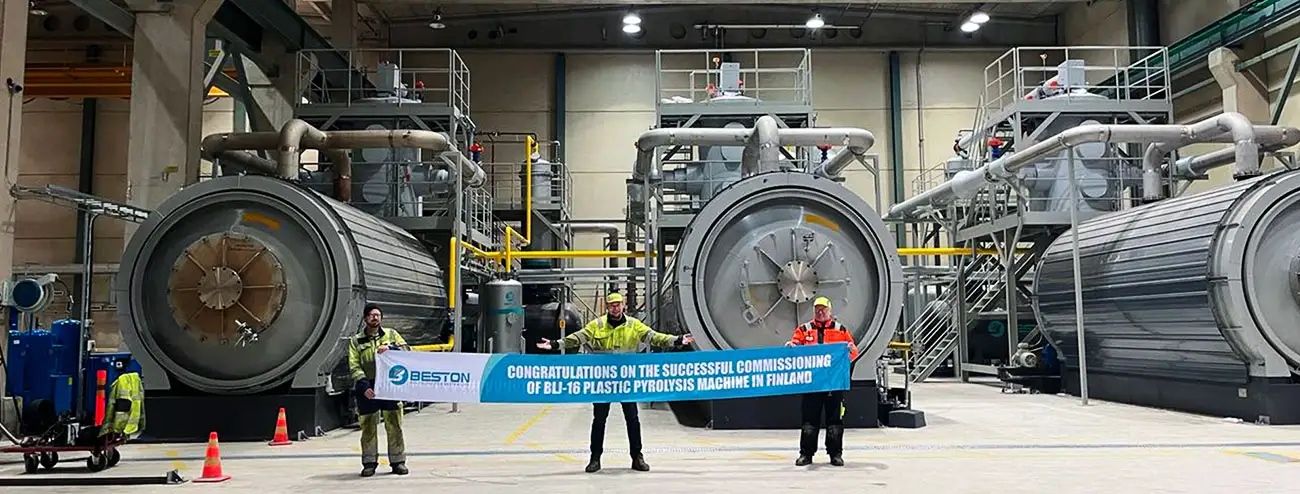
Batch pyrolysis systems can be deployed in stages.
Instead of constructing a large facility based on long-term production forecasts, an investor can establish an initial small pyrolysis machine and expand capacity after feedstock supply, product demand, and operational performance have been demonstrated.
This staged approach creates a more manageable capital deployment profile. It also allows project developers to validate local feedstock characteristics and product markets before making a larger investment.
The concept is particularly useful in emerging markets where reliable waste statistics and long-term supply contracts may be limited.
Simpler Process Architecture Can Reduce Complexity
Batch pyrolysis generally involves fewer continuous material-transfer operations than a fully continuous system.
Because the reactor is loaded and discharged according to a defined production cycle, the process can be comparatively straightforward to operate. This can reduce the complexity of certain auxiliary systems and make the technology more accessible in locations where highly specialized technical personnel are not readily available.
However, simpler does not mean that environmental or safety systems can be neglected. Gas sealing, pressure management, combustion control, condensation, fire protection, and emission treatment remain fundamental components of a properly engineered facility.
Lower Automation Requirements Can Improve Capital Efficiency
Automation can improve productivity and reduce labor requirements, but it also increases equipment and control-system costs.
For a smaller project, full automation may not generate sufficient economic benefit to justify the additional capital expenditure.
A batch facility can use a targeted level of automation for critical functions such as temperature monitoring, combustion control, gas pressure management, and safety interlocking while retaining manual control over selected loading and unloading activities.
This creates an opportunity to balance automation with project scale rather than applying the same control philosophy used for a high-capacity industrial plant.
Feedstock Flexibility Can Broaden Revenue Opportunities
A batch system can be advantageous when feedstock characteristics vary between production cycles.
For example, a project may process different biomass residues according to seasonal availability. Each material can be characterized and processed under appropriate operating conditions rather than forcing every feedstock through one fixed continuous operating window.
This flexibility can broaden the potential feedstock portfolio and reduce dependence on a single waste stream.
However, different feedstocks can generate different product yields and emissions. Feedstock testing and operating-parameter optimization remain necessary to maintain consistent product quality.
Product Value Can Offset Processing Costs
The investment case for a batch pyrolysis project depends heavily on the value of its output.
Depending on the feedstock and process configuration, products can include biochar, pyrolysis oil, combustible gas, and recovered solid material.
Biochar projects may generate additional value through soil applications, material applications, or eligible carbon removal pathways. Tire pyrolysis projects may derive revenue from pyrolysis oil, recovered carbon material, and steel.
The economic model should distinguish between gross product output and commercially saleable product. Product purification, testing, storage, transportation, and market qualification can all affect realized revenue.
Maintenance and Operating Flexibility Matter
Batch operation allows maintenance to be scheduled between production cycles.
This can simplify inspection and servicing of certain components because the reactor and associated equipment can be brought offline as part of the normal operating sequence.
For projects located in regions with limited access to specialized maintenance services, this operational flexibility can reduce the impact of planned interventions.
At the same time, batch systems may have longer startup and cooldown periods than continuous systems. These thermal cycles can influence fuel consumption, productivity, and equipment lifetime. The economic model should therefore evaluate annual throughput rather than comparing nominal reactor capacity alone.
A Practical Model for Small and Medium-Scale Projects
The principal investment advantage of batch pyrolysis is not simply lower equipment cost. Its value lies in the combination of moderate capital requirements, feedstock flexibility, modular deployment, and adaptable operating schedules.
For a project with limited initial capital or an uncertain waste supply, these characteristics can reduce investment exposure.
The technology becomes particularly attractive when the project can secure a localized feedstock source, minimize transportation costs, establish a viable product market, and scale capacity according to demonstrated demand.
Matching Technology With Investment Objectives
Batch pyrolysis is not automatically more economical than continuous pyrolysis. For large projects with abundant and consistent feedstock, continuous operation can provide higher throughput, greater automation, and stronger economies of scale.
The investment advantage of batch technology emerges when project conditions favor flexibility over maximum throughput.
A sound investment assessment should therefore consider feedstock availability, annual operating hours, capital budget, labor cost, product value, environmental requirements, maintenance capability, and future expansion plans.
When these variables align with the characteristics of batch operation, a modular pyrolysis project can provide a comparatively controlled entry point into waste valorization while preserving the option to expand processing capacity as the business case becomes more mature.

Comments
No comments yet. Be the first to react!