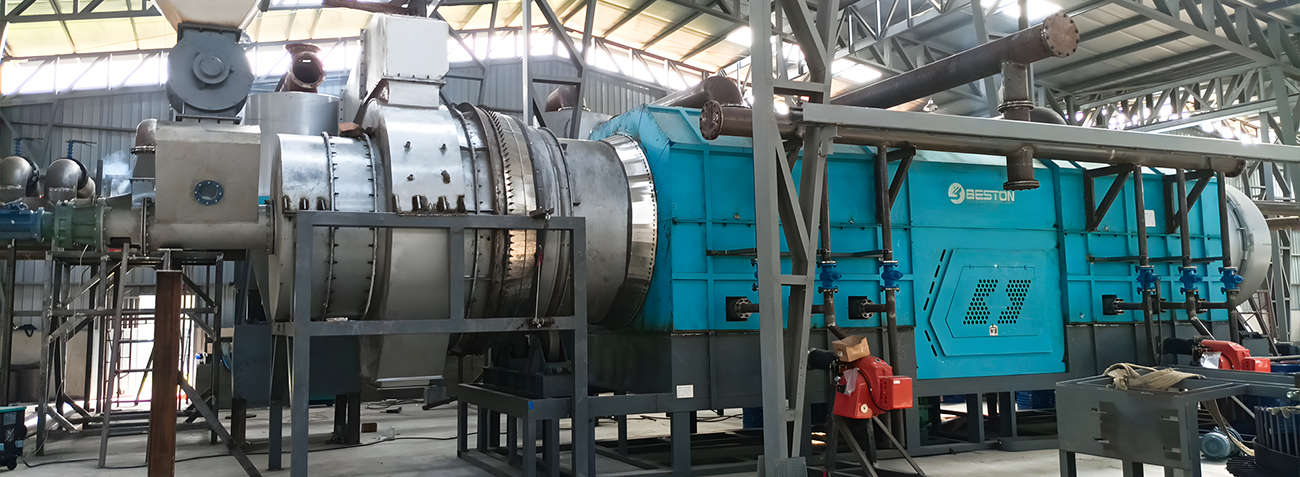
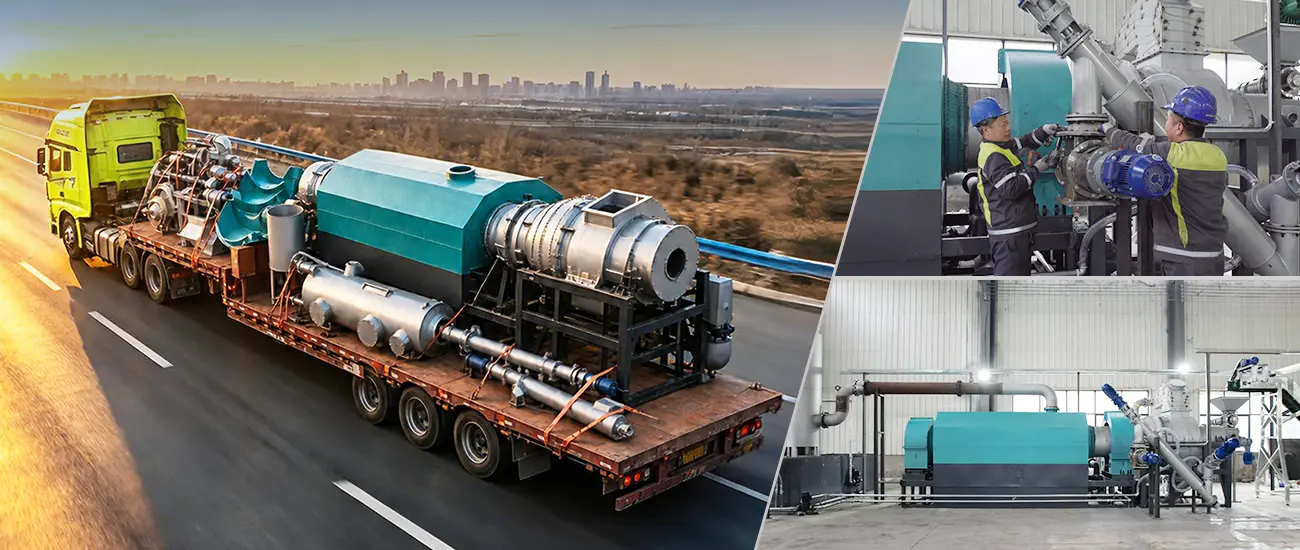
A mobile biochar machine is designed for biomass processing close to the point of residue generation. Instead of transporting bulky, low-density biomass to a centralized facility, the carbonization unit can be moved between operating sites or deployed in locations with limited infrastructure.
This configuration is particularly relevant where biomass is dispersed, transportation distances are long, or residue has a narrow collection window. The practical value of mobility therefore depends on feedstock geography, site access, production scale, and the intended use of the resulting biochar.
Forestry Residue Management
Forestry operations generate branches, bark, tops, thinning residue, and other woody material across large areas. Much of this material has low bulk density and can be expensive to transport over long distances.
A mobile biochar machine can be positioned closer to harvesting or thinning areas. Biomass can be chipped or prepared on site and processed without requiring all material to travel to a fixed carbonization plant.
This approach can reduce the amount of unprocessed biomass entering the transport chain. It can also create a more concentrated and stable material that is easier to store or transport after carbonization.
Forestry deployment may be particularly relevant for thinning operations where residue volumes vary between sites.
Agricultural Residue Processing
Agricultural residues are often generated seasonally and distributed across multiple farms. Examples include straw, pruning residue, corn stalk, and other field-derived biomass.
A fixed biochar plant may require a large collection network to maintain year-round utilization. A mobile system changes this logistical structure by moving the processing equipment closer to the residue source.
The resulting biochar can potentially be returned to agricultural land, used in soil-related applications, or transported to another market. The appropriate route depends on product characteristics and local requirements.
Moisture remains an important consideration. Fresh agricultural residue can contain substantial water, increasing thermal energy demand. Drying strategy and harvest timing therefore influence the practicality of mobile carbonization.
Remote Biomass Processing
Some biomass resources are located far from industrial infrastructure. Remote forestry areas, plantations, farms, and land-management sites may have limited access to electricity, roads, or permanent buildings.
A mobile configuration can reduce dependence on a centralized processing site. However, mobility does not eliminate infrastructure requirements. The deployment location still needs adequate access for transportation, feedstock preparation, equipment positioning, product removal, and safe operation.
The equipment footprint, transport method, setup time, and utility requirements should therefore be assessed before deployment.
Multi-Site Biomass Operations
Organizations managing multiple biomass sources may use a mobile system as a distributed processing asset.
For example, a forestry operator may conduct harvesting across several locations during the year. A centralized plant would require continuous movement of raw biomass, while a mobile unit can follow the operational schedule.
This creates a different logistics model:
biomass source → local processing → biochar consolidation or local application
The value of this model increases when raw biomass has high transport costs relative to its processed form.
Land and Vegetation Management
Vegetation management activities can generate substantial woody residue. Clearing invasive vegetation, maintaining utility corridors, restoring degraded land, and managing wildfire fuel loads are examples.
A mobile biochar machine can process suitable biomass near the management site instead of leaving residue in unmanaged piles or transporting it to a distant facility.
The carbonized product may then be used for soil improvement, land restoration, or other approved applications. Feedstock eligibility and environmental requirements should be assessed before processing.
Emergency and Seasonal Deployment
Mobile equipment can also serve projects with temporary or highly seasonal biomass availability.
A project may not justify a permanent carbonization facility when residue is available only for a short operating period. Mobile deployment can provide processing capacity without requiring the same degree of permanent infrastructure.
Seasonal operations still require careful planning. Transport, installation, feedstock preparation, maintenance, and product storage must be coordinated within the available operating window.
Key Factors for Mobile Deployment
| Factor | Why It Matters |
|---|---|
| Feedstock density | Determines the cost of transporting raw biomass |
| Biomass distribution | Influences the value of equipment mobility |
| Moisture content | Affects drying demand and energy balance |
| Site accessibility | Determines whether equipment can reach the processing location |
| Available utilities | Influences installation and operating requirements |
| Product destination | Determines whether biochar remains on site or enters another logistics chain |
| Operating duration | Affects equipment utilization and project economics |
| Local regulations | Determine environmental and operational requirements |
Mobility Should Follow Feedstock Geography
The main advantage of a mobile biochar machine is not simply that it can be transported. Its value comes from relocating the carbonization process closer to dispersed biomass resources.
Forestry residue, agricultural waste, remote biomass, vegetation-management material, and seasonal feedstock can all create conditions where decentralized processing is technically relevant. The strongest applications are generally those where raw biomass is bulky, geographically dispersed, or costly to transport.
A mobile configuration should therefore be selected around the feedstock catchment area, site accessibility, operating schedule, and final biochar pathway. When these factors align, distributed carbonization can reduce unnecessary biomass transport while creating a more manageable carbonized product at the source.

Comments
No comments yet. Be the first to react!