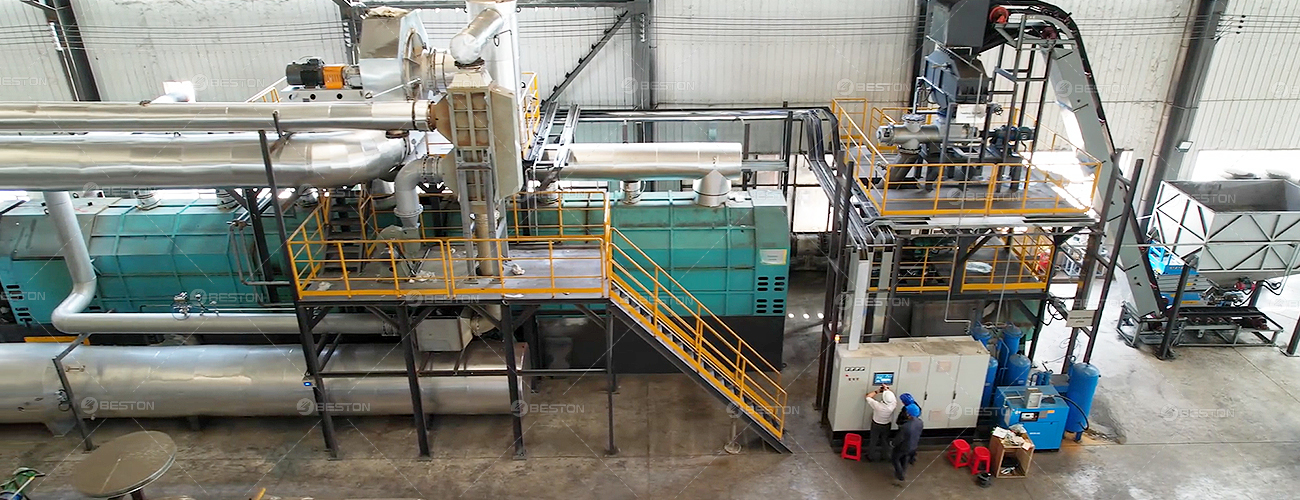
Continuous tire pyrolysis projects have attracted growing attention as industries seek commercially viable solutions for managing end-of-life tires. Unlike conventional disposal methods, continuous pyrolysis converts waste tires into marketable products such as pyrolysis oil, recovered carbon black, steel wire, and combustible gas. The economic proposition is therefore based on both waste treatment and resource recovery.
However, profitability is not determined by processing capacity alone. Feedstock cost, product yield, product quality, energy consumption, logistics, capital expenditure, and local market conditions collectively shape the project’s financial performance. A rigorous assessment of these variables is essential before investment decisions are made.
Feedstock Cost and Supply Security
The availability and acquisition cost of waste tires are fundamental to project profitability.
In some markets, tire generators and waste management companies may pay a tipping fee to have waste tires responsibly treated. In other regions, operators may need to purchase or collect tires, creating a direct feedstock expense.
The most favorable projects typically secure a stable supply through long-term agreements with tire dealers, vehicle service centers, fleet operators, municipal collection systems, or waste management companies.
Feedstock quality also matters. Tires with excessive soil, metal contamination, or other foreign material can increase pretreatment requirements and reduce operational efficiency.
Continuous Operation Improves Asset Utilization
One of the primary economic advantages of continuous pyrolysis plant is improved equipment utilization.
A continuous system can operate for extended periods with fewer interruptions for feeding, heating, cooling, and material discharge. This can increase annual throughput while reducing downtime associated with repeated startup and shutdown cycles.
Higher equipment utilization can improve the project’s fixed-cost absorption. Construction investment, labor, land, and infrastructure expenses are distributed across a larger volume of processed tire.
However, continuous operation requires reliable process control, stable feedstock preparation, and effective maintenance management. A technically advanced system does not automatically guarantee high profitability if operational availability is poor.

Product Yield Determines Revenue Potential
The primary revenue streams of a tire pyrolysis plant generally come from four products: pyrolysis oil, recovered carbon black, steel wire, and combustible gas.
The exact output ratio depends on tire composition and process conditions. Product yield therefore has a direct influence on project revenue.
Pyrolysis oil often represents a significant portion of the product value. Its commercial attractiveness depends on local fuel prices, quality specifications, refining requirements, and customer demand.
Recovered carbon black can provide an additional revenue stream. However, its market value depends strongly on purity, ash content, particle characteristics, and the degree of post-processing.
Steel wire typically has a lower unit value but contributes to overall revenue while reducing the volume of residual waste requiring disposal.
Energy Recovery Reduces Operating Costs
Energy efficiency is another important profitability driver.
The pyrolysis process generates combustible gas that can generally be recovered and reused within the plant. Using this gas as an internal energy source can reduce dependence on external fuel.
An efficient energy recovery system may therefore lower:
- Fuel consumption
- Operating expenses
- Energy-related emissions
The economic benefit becomes particularly significant in regions where conventional fuel prices are high.
Proper thermal integration also helps maintain stable reactor temperatures, improving process efficiency and product consistency.
Product Quality Influences Market Access
High production volume does not necessarily translate into high profitability.
Customers may impose technical requirements on pyrolysis oil and recovered carbon black. If products fail to meet these specifications, they may be sold into lower-value markets or require additional processing.
Consistent product quality depends on feedstock composition, reactor temperature, residence time, condensation efficiency, and process control.
For this reason, profitability analysis should incorporate product quality targets rather than relying solely on theoretical output volumes.
Logistics Can Reshape Project Economics
Waste tires are bulky and relatively difficult to transport efficiently.
A facility located far from feedstock sources may face high inbound transportation costs. Similarly, long-distance shipment of pyrolysis products can reduce net revenue.
Strategic site selection can therefore have a major impact on profitability.
Locations near major urban areas, tire collection centers, industrial zones, or transportation hubs may provide advantages in both feedstock procurement and product distribution.
Capital Investment and Payback Period
Continuous tire pyrolysis facilities generally require substantial upfront investment.
Capital expenditure may include:
- Pyrolysis equipment
- Pretreatment system
- Condensation system
- Product storage
- Emission control
- Fire protection
- Electrical infrastructure
- Civil construction
A realistic financial model should distinguish between equipment cost and total installed project cost.
Payback calculations should also account for working capital, maintenance expenditure, labor, insurance, permitting, and unexpected downtime.
Overly optimistic models that focus only on equipment price and product revenue may significantly overstate actual returns.
Maintenance and Operational Availability
Profitability is closely linked to annual operating hours.
Unexpected equipment failure can result in:
- Lost production
- Reduced product revenue
- Emergency repair expenses
- Contractual supply disruption
Preventive maintenance, critical spare part inventory, and technical support can improve plant availability.
For continuous systems, the reliability of feeding, sealing, gas handling, and discharge mechanisms is particularly important because a failure in one subsystem can affect the entire production chain.
Market Diversification Strengthens Financial Resilience
A robust project should avoid excessive dependence on a single revenue source.
Revenue diversification may involve selling pyrolysis oil to multiple industrial customers while developing separate markets for recovered carbon black and steel.
Long-term offtake agreements can also reduce exposure to commodity price volatility.
Projects with flexible product marketing strategies are generally better positioned to withstand fluctuations in fuel prices and recycled material demand.
Building a Sustainable Profit Model
The profitability of a continuous tire pyrolysis project depends on the interaction of multiple economic variables rather than one isolated factor. Reliable feedstock, high equipment availability, efficient energy recovery, consistent product quality, favorable logistics, and diversified markets collectively determine commercial performance.
Continuous operation can improve annual throughput and asset utilization, but the technology must be supported by sound supply chain management and disciplined maintenance. Investors should therefore evaluate the complete project lifecycle, from waste tire procurement to final product sales.
With appropriate site selection, stable feedstock sourcing, efficient process integration, and realistic financial modeling, continuous tire pyrolysis can provide a viable pathway for converting end-of-life tires into valuable resources while addressing a persistent waste management challenge.

Comments
No comments yet. Be the first to react!