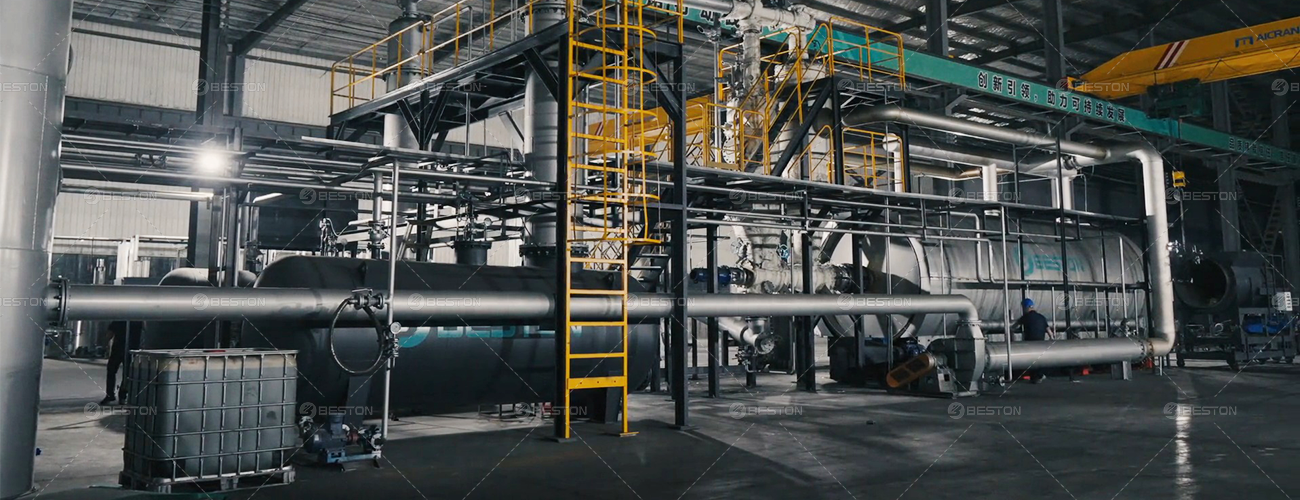
Plastic pyrolysis can convert difficult plastic waste into hydrocarbon-rich products. From a process perspective, the concept is relatively straightforward. From a regulatory perspective, however, developing a commercial project in Europe can be considerably more complicated.
The difficulty does not come from a single regulation. It arises from the interaction between waste classification, environmental permitting, emissions control, product status, chemical legislation, land-use requirements, and local planning rules.
A project may therefore require substantially more regulatory preparation than a conventional industrial processing facility. The precise requirements also vary according to the feedstock, process configuration, output product, project location, and intended end use.
Waste Classification Determines the Regulatory Path
The first compliance question is often the legal status of the incoming plastic material.
Plastic waste can contain different polymers, additives, fillers, pigments, flame retardants, residual food, metals, or other contaminants. Its classification can influence storage requirements, handling procedures, transport obligations, and the type of environmental authorization required.
A plastic pyrolysis plant should therefore establish a clear feedstock specification before equipment selection.
The distinction between different waste categories can also affect the project’s permitting strategy. A facility processing relatively clean and well-characterized plastic streams may face a different regulatory pathway from one accepting mixed or contaminated waste.
Feedstock flexibility is therefore not necessarily an advantage from a compliance perspective. Accepting more waste types can increase the regulatory and operational burden.

Environmental Permitting Can Become a Major Bottleneck
Environmental permitting is one of the most significant challenges for a European plastic pyrolysis project.
Authorities may examine the entire process chain rather than the plastic to oil machine alone. This can include waste reception, storage, shredding, feeding, pyrolysis, condensation, non-condensable gas handling, product storage, wastewater management, air emissions, and residue disposal.
The permitting authority may also require evidence that the proposed technology can operate within applicable environmental limits.
As a result, project development often requires detailed process descriptions, mass and energy balances, emission assessments, risk evaluations, and supporting technical documentation.
Permitting timelines can become longer when regulators request additional information or when the proposed process falls into a regulatory category requiring more extensive assessment.
Air Emission Control Requires Process-Level Attention
Plastic pyrolysis does not involve direct combustion of the feedstock inside the reactor. However, emissions can still arise from process gas combustion, auxiliary heating, flaring, storage, handling, and accidental releases.
The composition of the feedstock has a direct influence on the potential emission profile. PVC, for example, introduces chlorine into the process. Other additives can contribute additional contaminants that require consideration during gas treatment.
A robust emission-control architecture may therefore involve combustion optimization, particulate removal, acid-gas control, adsorption, condensation, or other treatment stages depending on the feedstock and regulatory requirements.
The important point is that emission compliance cannot be demonstrated simply by stating that pyrolysis operates under oxygen-limited conditions. The complete emission pathway must be assessed.
Product Classification Creates Another Layer of Uncertainty
One of the most commercially important questions is whether the output should be treated as waste, an intermediate material, or a product.
Pyrolysis oil is not automatically considered a marketable fuel or chemical feedstock simply because it can be recovered from plastic waste.
Its legal status may depend on its composition, intended application, processing history, applicable waste legislation, and whether relevant end-of-waste criteria are satisfied.
This distinction can have major implications for storage, transportation, sales, taxation, and downstream use.
Therefore, product specifications should be developed alongside the regulatory strategy rather than after the plant has already been designed.
Chemical Compliance Matters for Recovered Products
If pyrolysis oil or another recovered hydrocarbon stream enters a chemical or fuel supply chain, additional regulatory considerations may arise.
The project may need to address substance identification, composition, safety documentation, downstream use, and registration or notification requirements depending on the specific application and jurisdiction.
This is particularly important when the business model depends on selling recovered oil to an external chemical manufacturer or fuel processor.
A product that performs well technically may still face market-access limitations if its regulatory status is unclear.
Waste Residues Require Their Own Management Strategy
Plastic pyrolysis generates more than oil and gas. Solid residues may contain carbon, inorganic fillers, metals, and concentrated additives from the original feedstock.
These residues cannot simply be assumed to have unrestricted commercial value.
Their composition should be characterized, and the project should establish a compliant route for reuse, recovery, or disposal. If hazardous constituents become concentrated during pyrolysis, the downstream management requirements may become more stringent.
This makes residue characterization an important part of both environmental permitting and project economics.
Local Planning Can Affect Project Feasibility
Even when a technology satisfies the relevant environmental requirements, a project still needs to fit within local land-use and planning frameworks.
Authorities may consider proximity to residential areas, industrial zoning, road access, fire safety, storage capacity, traffic, noise, and emergency response.
Community acceptance can also influence project development. Waste-to-resource facilities can attract scrutiny because of concerns about odor, air emissions, traffic, and perceived environmental risks.
Early engagement with local stakeholders can therefore reduce the likelihood of major objections appearing late in the development process.
Designing Compliance Into the Project
The most effective approach is to treat compliance as a design parameter rather than an administrative task added after equipment selection.
Feedstock specifications, reactor configuration, gas treatment, condensation, residue management, monitoring systems, and product specifications should be developed around the applicable regulatory framework.
This can prevent a common project-development problem: selecting equipment first and discovering later that the proposed configuration requires substantial modification to obtain approval.
Turning Regulatory Complexity Into Project Certainty
Plastic pyrolysis projects in Europe face a multilayered compliance environment because they sit at the intersection of waste treatment, thermal processing, emissions control, and resource recovery.
The greatest challenge is therefore not simply installing a pyrolysis reactor. It is establishing a complete and defensible chain from waste reception to final product or residue management.
Projects with clearly defined feedstock, robust emission control, documented mass balances, appropriate monitoring, and an established regulatory pathway are better positioned to navigate this complexity.
In European markets, regulatory readiness is not merely a prerequisite for construction. It is a core component of project feasibility, investment planning, and long-term operational stability.

Comments
No comments yet. Be the first to react!