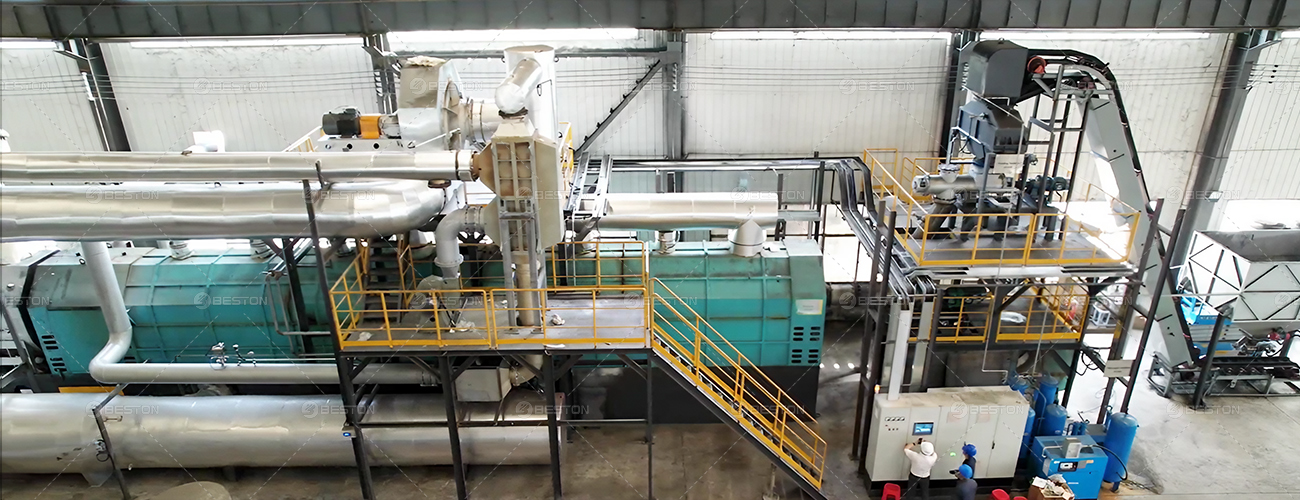
Tire pyrolysis has evolved into a structured industrial pathway for converting end-of-life rubber into oil, gas, steel wire, and carbon black. While capital investment is often the primary focus during project planning, long-term economic viability is fundamentally determined by operational expenditure. In a continuous or semi-continuous pyrolysis plant, operating costs are shaped by feedstock logistics, energy consumption, labor deployment, maintenance intensity, and environmental compliance requirements. These cost components are interdependent and highly sensitive to process stability and feedstock quality.
Feedstock Acquisition and Pre-Processing Costs
The largest recurring cost driver in tire pyrolysis operations is feedstock procurement. End-of-life tires are not uniformly priced commodities; their cost structure depends on regional waste management policies, transportation distances, and preprocessing requirements.
In many markets, tires may be sourced at low or even negative cost due to disposal liabilities. However, once transportation, loading, and sorting are included, the effective cost increases significantly. Logistics inefficiencies can rapidly erode margin, particularly when collection networks are fragmented.
Pre-processing also contributes to operational expenditure. Tires often require steel bead removal, shredding, and size standardization before entering a tire pyrolysis plant. These mechanical processes involve wear-intensive equipment, increasing both energy consumption and consumable replacement frequency.
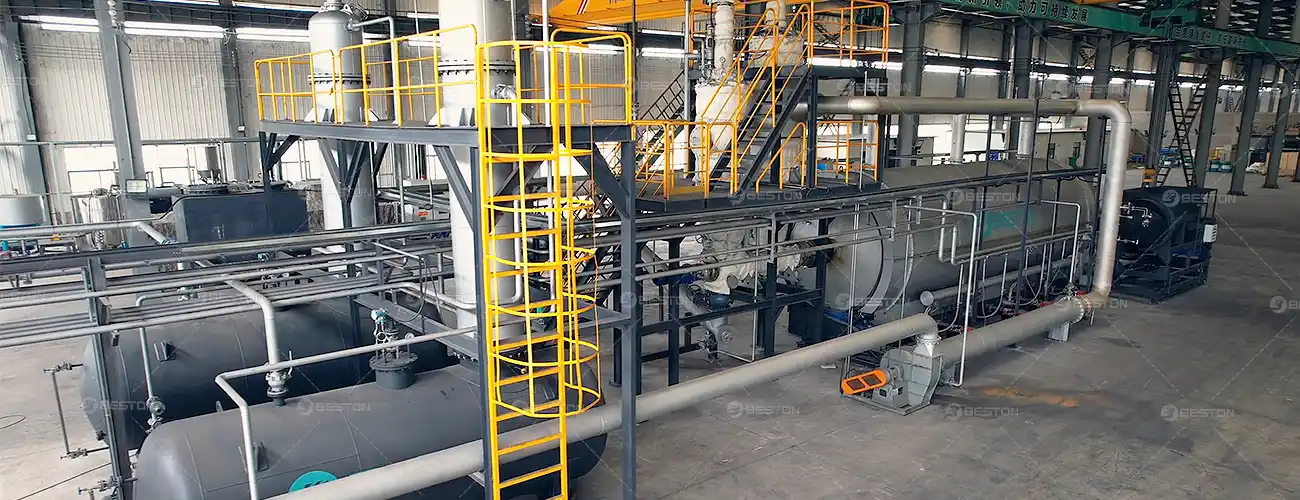
Energy Consumption and Thermal Efficiency
Energy input is a dominant operational cost of tyre pyrolysis plant. The process requires sustained heating typically in the range of 350°C to 500°C to induce polymer breakdown and volatilization.
Although non-condensable gases generated during pyrolysis are often recycled as internal fuel, initial startup energy and supplemental heating remain necessary. Inefficient heat recovery systems increase reliance on external fuel sources, directly raising operating expenses.
Thermal inefficiencies can arise from poor insulation, uneven reactor heating, or suboptimal reactor design. In a pyrolysis plant, even small heat losses accumulate over continuous operation cycles, significantly affecting unit energy cost per ton of processed tire feedstock.
Labor and Operational Staffing Requirements
Although tire pyrolysis systems are increasingly automated, skilled labor remains essential for stable operation. Operators are required to monitor reactor conditions, manage feedstock flow, oversee safety systems, and respond to process deviations.
Labor costs vary depending on plant scale and automation level. Fully continuous systems require fewer operators per ton of output but demand higher technical expertise, resulting in elevated wage structures.
Additionally, shift-based staffing is necessary for 24-hour operation. This introduces labor redundancy costs, overtime premiums, and training expenses, all of which contribute to the overall operating budget of a pyrolysis plant.
Maintenance and Equipment Wear
Mechanical wear is a significant cost factor in tire pyrolysis due to the abrasive and high-temperature nature of the process. Steel belts embedded in tires contribute to accelerated wear in shredders, conveyors, and reactor feeding systems.
Reactor linings are subject to thermal fatigue and chemical corrosion from pyrolytic vapors. Regular inspection, refractory replacement, and seal maintenance are required to prevent unplanned shutdowns.
Condensation systems are also prone to fouling from tar deposition, requiring periodic cleaning and component replacement. In a pyrolysis plant, maintenance downtime directly reduces production throughput, indirectly increasing unit operating cost.
Preventive maintenance programs reduce catastrophic failure risk but increase scheduled expenditure. This creates a trade-off between operational stability and maintenance cost optimization.
Catalyst and Additive Consumption (If Applicable)
Some advanced tire pyrolysis systems incorporate catalysts to improve oil yield quality or reduce reaction temperature requirements. While not universally required, catalytic systems introduce recurring material costs.
Catalysts may suffer deactivation due to carbon deposition or sulfur contamination, requiring regeneration or replacement cycles. These consumables add to operational expenditure and must be accounted for in long-term financial modeling.
Even in non-catalytic systems, additives such as desulfurization agents or gas cleaning media may be required in downstream processing stages within a pyrolysis plant.
Product Handling and Storage Costs
Tire pyrolysis produces multiple output streams, each requiring specific handling infrastructure. Pyrolysis oil must be stored in sealed tanks with temperature control to prevent degradation. Carbon black requires bulk handling systems to prevent dust dispersion and material loss.
Steel wire residue must be collected, compacted, and transported to recycling facilities. Each of these streams incurs handling, packaging, and logistics costs.
Storage infrastructure also requires safety systems such as fire suppression, vapor recovery, and leak detection. These auxiliary systems contribute to fixed operational overhead in a pyrolysis plant.
Environmental Compliance and Emission Control
Environmental management represents a growing proportion of operational expenditure in modern tire pyrolysis facilities. Regulatory frameworks often mandate continuous emission monitoring, flue gas treatment, and waste residue management.
Gas cleaning systems such as scrubbers, catalytic oxidizers, and activated carbon filters require consumables and periodic replacement. These systems also consume energy, increasing indirect operating costs.
Solid residue disposal must comply with hazardous or industrial waste regulations depending on composition. Compliance reporting, environmental audits, and permitting renewals add administrative costs that are often underestimated during project planning.
Within a pyrolysis plant, environmental systems are not optional add-ons but integral operational subsystems with continuous cost implications.
Utilities and Auxiliary Systems
Auxiliary utilities such as cooling water systems, compressed air supply, and electrical infrastructure contribute to baseline operational expenditure. Cooling systems are particularly significant in condensing pyrolysis vapors and stabilizing product output.
Electrical consumption varies depending on system design and level of automation. High-torque shredders, conveyors, and control systems collectively contribute to continuous power demand.
Water treatment systems may also be required for cooling loop maintenance and emissions control, adding further operational complexity and cost.
Downtime and Production Efficiency Losses
Unplanned downtime has a direct financial impact by reducing throughput capacity. Causes of downtime include equipment failure, feedstock inconsistency, tar blockage, and control system malfunction.
Even short interruptions can disrupt thermal stability, requiring energy-intensive restart procedures. In a pyrolysis plant, these inefficiencies translate into higher per-unit production costs due to underutilization of fixed infrastructure.
Process stability is therefore a critical economic variable, directly linked to operational cost efficiency.
Final Perspective
The operational cost structure of tire pyrolysis projects is inherently multidimensional, encompassing feedstock logistics, thermal energy demand, labor deployment, mechanical maintenance, environmental compliance, and utility consumption.
A pyrolysis plant operates as a continuous thermochemical system where small inefficiencies compound across interconnected subsystems. As a result, operational cost optimization is not achieved through isolated interventions but through holistic system design, process stability enhancement, and lifecycle management strategies.
Ultimately, long-term economic performance depends on the ability to maintain high uptime, maximize energy integration, and minimize consumable-driven losses within a tightly controlled operational framework.
Comments
No comments yet. Be the first to react!