Rice husk char has gained increasing attention as a valuable carbon-rich material for agriculture, environmental remediation, metallurgy, and energy applications. However, one of the most critical quality indicators affecting its commercial value is ash content.
Unlike woody biomass, rice husk naturally contains a substantial concentration of inorganic minerals, particularly silica. During thermal conversion, organic matter is volatilized while most mineral constituents remain in the solid phase. As a result, ash content in rice husk char can be significantly higher than in many other biomass-derived chars.
Effective ash control is therefore essential for producers seeking to improve product consistency, enhance carbon concentration, and meet the specifications required by downstream markets.
Sources of Ash in Rice Husk Char
Understanding the origin of ash is the first step toward controlling it.
Intrinsic Mineral Composition
Rice husk is characterized by an unusually high silica concentration. Depending on cultivation conditions, soil composition, and harvesting practices, silica may account for a considerable portion of the biomass dry weight.
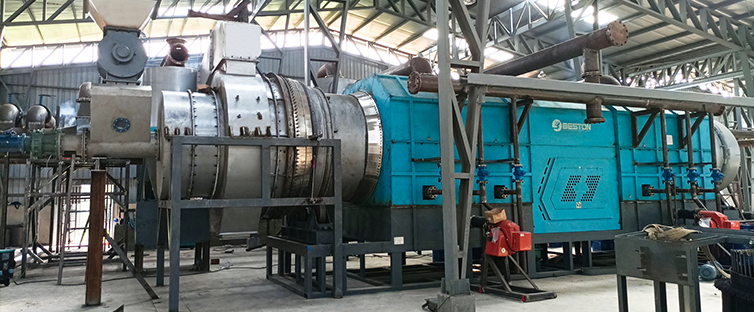
In rice husk charcoal making machine, these inorganic components remain largely unchanged, resulting in elevated ash levels within the final char product.
External Contamination
Additional ash can originate from contaminants introduced before processing. Common sources include:
- Soil particles attached during harvesting
- Sand and dust accumulated during transportation
- Stones and foreign materials mixed during storage
- Metallic impurities from handling equipment
Even small quantities of contamination can noticeably increase the ash fraction of the final product.
Feedstock Preparation as a Key Control Measure
The quality of rice husk entering the reactor directly influences the quality of the char produced.
Cleaning and Screening
Mechanical screening systems remove oversized debris, stones, and other contaminants before thermal treatment. Advanced cleaning equipment may also incorporate air separation technologies to eliminate lightweight foreign matter.
A well-designed preprocessing stage reduces unnecessary mineral loading and improves overall process stability.
Moisture Management
Although moisture does not directly contribute to ash formation, excessive water content can negatively affect pyrolysis efficiency of charcoal machine. Inconsistent drying may lead to uneven heating and incomplete carbonization.
Maintaining uniform moisture levels helps create more predictable operating conditions and supports consistent char quality.
The Influence of Pyrolysis Parameters on Ash Content
Ash quantity is primarily determined by feedstock composition, but operating conditions strongly influence the ash percentage measured in the final product.
Temperature Selection
Higher pyrolysis temperatures promote greater volatilization of organic compounds. As carbon-containing components are removed, the remaining mineral fraction becomes more concentrated.
Consequently, excessive temperatures may increase the apparent ash percentage even when the absolute mineral content remains unchanged.
Operators must balance carbonization efficiency with product specifications when selecting process temperatures.
Residence Time Optimization
Prolonged residence time can further reduce volatile matter and increase the relative concentration of inorganic constituents.
Careful optimization prevents unnecessary mass loss while maintaining desired carbon characteristics.
Controlled Heating Profiles
Rapid and uncontrolled heating may create localized overheating zones within the reactor. These conditions can accelerate carbon degradation and contribute to undesirable variations in product quality.
Modern process control systems help maintain uniform thermal conditions throughout the conversion cycle.
The Role of a Pyrolysis Plant in Ash Management
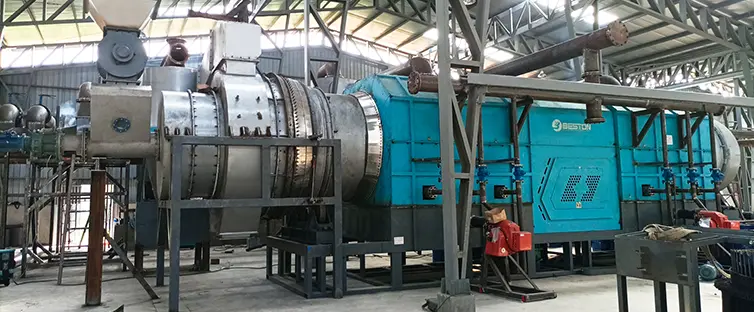
A modern pyrolysis plant provides the process control capabilities necessary for effective ash management.
Uniform Thermal Distribution
Advanced reactor designs promote homogeneous heat transfer across the biomass bed. Consistent temperature distribution reduces product variability and improves operational predictability.
Automated Process Monitoring
Sensors and digital control platforms enable continuous monitoring of critical parameters such as temperature, residence time, and feed rate. This level of control allows operators to maintain optimal conditions throughout production.
Reduced Secondary Contamination
Well-engineered material handling systems minimize the introduction of external contaminants during feeding, processing, and discharge. This contributes directly to lower ash variability and improved product consistency.
Post-Processing Strategies for Quality Enhancement
After carbonization, several techniques can further improve product quality.
Particle Classification
Screening and grading systems separate fine particles that often contain elevated mineral concentrations. This process can enhance the uniformity of the final product.
Ash Analysis and Quality Control
Routine laboratory testing helps producers monitor trends and identify process deviations. Key analytical parameters typically include:
- Total ash content
- Fixed carbon content
- Volatile matter
- Moisture content
- Silica concentration
Regular testing establishes a reliable quality assurance framework and supports customer confidence.
Market Benefits of Low-Ash Rice Husk Char
Lower ash content generally corresponds to higher carbon concentration and improved performance in many end-use applications.
For agricultural use, balanced ash levels contribute to predictable soil amendment properties. In industrial sectors, reduced ash can improve combustion behavior, increase energy density, and enhance material handling characteristics.
As demand for premium biomass-derived carbon products continues to grow, producers who prioritize ash control gain a competitive advantage through improved product quality and broader market accessibility.
Building a Consistent Production Strategy
Successful ash control in rice husk char begins with feedstock selection and extends throughout the entire production chain. Clean raw material, optimized operating conditions, precise process control, and rigorous quality monitoring all contribute to achieving a stable and marketable product.
By integrating these practices into daily operations, manufacturers can produce rice husk char with greater consistency, higher carbon value, and stronger commercial appeal while maximizing the capabilities of a modern pyrolysis plant.
Comments
No comments yet. Be the first to react!