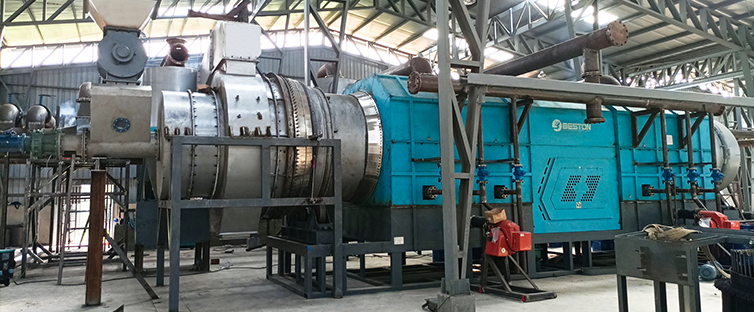
Wood pyrolysis is widely used to convert forestry residues, sawmill waste, and other woody biomass into valuable products such as biochar, pyrolysis gas, and condensable liquid. Under oxygen-limited conditions, the thermal decomposition process transforms organic compounds into a stable carbon-rich material.
However, the formation of polycyclic aromatic hydrocarbons (PAHs) is an important quality consideration during biochar production. PAHs are a group of persistent organic compounds generated through complex thermal reactions involving aromatic structures and incomplete degradation pathways.
Although controlled pyrolysis can produce biochar with low PAH concentrations, improper process conditions may increase the formation or accumulation of certain PAH compounds. This is particularly important for biochar intended for agricultural applications, carbon removal projects, or regulated markets where contaminant limits are strictly evaluated.
Effective PAH control requires a comprehensive approach involving feedstock selection, reactor operation, vapor management, and product quality verification.
Influence of Wood Composition on PAH Formation
The chemical structure of wood directly affects pyrolysis behavior. Wood primarily consists of cellulose, hemicellulose, lignin, extractives, and mineral components. Each fraction follows different thermal degradation pathways in wood charcoal machine.
Cellulose and hemicellulose decompose relatively quickly and generate various oxygen-containing volatile compounds. Lignin, with its complex aromatic structure, decomposes over a wider temperature range and contributes significantly to aromatic compound formation.
During pyrolysis, some aromatic intermediates can undergo secondary reactions. Under certain conditions, these reactions may lead to the formation of larger condensed aromatic molecules, including PAHs.
Wood species, growth conditions, moisture content, and storage conditions can influence feedstock characteristics. Therefore, consistent feedstock preparation helps reduce process variability and improves control over PAH generation.

Optimizing Pyrolysis Temperature and Heating Conditions
Temperature management is one of the most important factors affecting PAH formation during wood pyrolysis.
At insufficient temperatures, biomass decomposition may remain incomplete. The resulting biochar may contain higher levels of residual organic compounds because volatile components are not fully removed.
As temperature increases, carbonization of biomass becomes more intensive. Volatile matter decreases, and carbon structures become increasingly aromatic and stable.
However, excessive thermal severity can also promote secondary reactions. When pyrolysis vapors remain at high temperatures for extended periods, smaller aromatic molecules may combine and form larger PAH structures.
The optimal temperature depends on the desired biochar characteristics, reactor configuration, and application requirements. Stable temperature control is essential for achieving effective carbonization while limiting undesirable by-product formation.
Managing Vapor Residence Time and Secondary Reactions
Vapor residence time plays a critical role in PAH development. After leaving the biomass matrix, pyrolysis vapor continues to undergo chemical reactions before condensation.
Long residence times at elevated temperatures provide additional opportunities for cracking, reforming, and polymerization reactions. These pathways can increase the concentration of heavier aromatic compounds.
Rapid removal of pyrolysis vapor from the high-temperature zone helps reduce secondary transformation. Reactor design should therefore provide efficient vapor transport while minimizing unnecessary exposure to extreme thermal conditions.
Continuous pyrolysis systems with controlled material movement and gas flow can provide more consistent vapor residence conditions compared with unstable thermal environments.
Reactor Design and Process Stability
A stable reactor environment is essential for controlling PAHs. Uneven heating, oxygen leakage, or fluctuating feed rates can create localized reaction conditions that promote incomplete conversion.
A well-designed reactor maintains uniform heat distribution and a consistent oxygen-limited atmosphere. Proper sealing prevents unwanted oxidation reactions that may alter the intended pyrolysis pathway.
Automated monitoring systems can track critical parameters such as temperature, pressure, gas flow, and residence time. These operational data allow operators to identify deviations and maintain stable production conditions.
Process stability not only improves PAH control but also enhances biochar consistency in terms of carbon content, ash level, and physical properties.
Gas Management and PAH Prevention
Pyrolysis gas and condensable vapor management are closely connected with PAH control. Some PAHs may remain within the vapor phase before being deposited onto biochar or recovered through condensation systems.
Efficient vapor separation and controlled cooling help manage the movement of organic compounds throughout the process.
Rapid cooling reduces the opportunity for secondary PAH formation during the transition from high-temperature vapor to condensed products. Properly designed condensation systems can also separate heavier organic fractions from the gas stream.
If pyrolysis gas is combusted for process heat, combustion conditions must be carefully controlled. Adequate temperature, oxygen supply, mixing, and residence time support complete oxidation and minimize the formation of unwanted organic compounds.
Testing and Quality Verification of Biochar
Laboratory analysis is essential for confirming PAH levels in finished biochar. Testing provides direct evidence that the product meets the requirements of its intended application.
PAH analysis typically evaluates a range of individual compounds because different PAHs exhibit different environmental characteristics.
Consistent sampling procedures are important because biochar properties can vary depending on feedstock location, reactor conditions, and production batch.
Combining laboratory results with production records creates a traceable quality management system. This information supports regulatory compliance, customer confidence, and carbon market verification.
Building a Low-PAH Wood Pyrolysis System
PAH control in wood pyrolysis depends on coordinated management across the entire production chain. Clean feedstock, optimized thermal conditions, stable reactor operation, efficient vapor handling, and reliable testing together determine the final product quality.
Rather than relying on downstream treatment alone, effective PAH management begins with process engineering. Controlling reaction conditions at the source provides a more reliable pathway for producing safe and consistent biochar.
With appropriate temperature management, controlled residence time, and comprehensive monitoring, wood pyrolysis can produce high-quality carbon materials while maintaining strong environmental performance. This approach supports the broader application of biochar in carbon storage, soil management, and sustainable resource utilization.
Comments
No comments yet. Be the first to react!