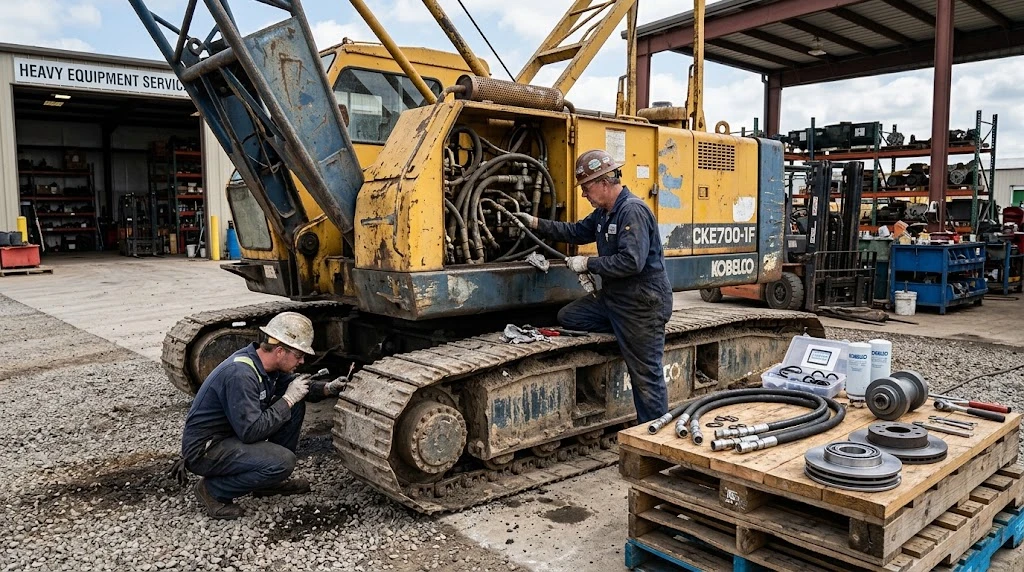
Running older Kobelco cranes means accepting a higher level of maintenance activity. These machines have proven their toughness over many years, but the passage of time affects every part. A crane that has been working steadily for a decade or more will need more frequent component changes. Rubber parts lose their resilience. Metal surfaces wear against each other. Electrical contacts become intermittent.
This is an expected part of managing heavy equipment. When you work with an aging fleet, you quickly learn which parts are most likely to fail. Your inventory management starts to focus on those high-demand items rather than a broad range of possibilities.
The following guide covers the components most often ordered for older Kobelco cranes. Knowing these can help you avoid unnecessary delays when repairs are needed.
Hydraulic Seals and Hoses
The hydraulic system is essential for crane operation, and on older Kobelco models, it is often the most maintenance-intensive area.
Hydraulic seals are a constant need. They become hard and brittle due to heat and pressure cycling, which leads to fluid leaks. This is a normal outcome of long-term use. Replacing seals on the main cylinders, swing motors, and winch assemblies is standard practice. The rod seals and piston seals on boom cylinders are also frequently required.
Hoses are another major item. High-pressure hydraulic lines are subject to flexing, abrasion, and extreme temperatures. A hose failure stops work immediately. Most fleet operators either keep a supply of common hose sizes or have an established source for rapid delivery. When sourcing Kobelco parts, hydraulic seals and hose assemblies are always near the top of the order list.
Undercarriage Wear Parts
For crawler cranes, the undercarriage is a continuous maintenance concern. Moving heavy equipment across rough ground accelerates wear on all running gear.
Track shoes can crack, bend, or wear thin from abrasive surfaces. Track pins and bushings stretch over time, affecting proper tracking and tension. If these issues are not addressed, the track may derail. The rollers also require attention. Track rollers and carrier rollers support the entire crane weight, and on older units, they frequently leak lubricant, lose seals, and develop flat spots.
Ordering undercarriage crane parts for an aging Kobelco is a regular activity. Full undercarriage replacements are uncommon unless the machine is being fully rebuilt. Most operators replace individual sections as they reach their wear limits. Keeping track pads, pins, and bushings in stock helps maintain mobility.
The track adjuster mechanism also needs monitoring. The recoil spring assembly absorbs heavy shocks. If it loses tension or its seal fails, the track becomes loose. Grease fittings, tensioner cylinders, and recoil springs are common orders for older crawler cranes.
Electrical Components and Limit Switches
While older cranes are not as electronically advanced as new models, their electrical systems remain vital. These components are particularly vulnerable to age.
Wiring harnesses suffer from heat, moisture, and vibration. Insulation becomes cracked and brittle over time. Temporary repairs may work for a while, but eventually new harness sections or connector pigtails are necessary.
Safety components are critical. Limit switches and load moment indicators prevent unsafe operations. A failed limit switch means the crane may not stop at the correct point. Older Kobelco cranes frequently need new micro switches, swing limiters, and weight sensors. Because these are safety devices, you cannot bypass them. You must order the correct replacements and verify proper function.
Operator controls also wear. The potentiometers inside joysticks develop dead spots, resulting in jerky movement. Replacing a joystick assembly is a common repair that restores smooth control.
Boom Components and Sheaves
The boom structure usually remains sound, but the attached components require regular servicing.
Sheave blocks endure heavy loads and continuous rotation. The bearings inside them wear, causing the wire rope to drag and wear prematurely. Replacement sheaves or bearings are routine orders for older machines.
Boom foot pins and pendants carry the full lifting force. Over years of use, these large pins can become worn or deformed. Changing a boom foot pin is a major task, but it may be necessary to maintain safety certification. Wire rope is also frequently ordered. While considered a consumable, it is one of the most commonly requested crane parts for older Kobelcos, especially because worn sheaves increase rope wear rates.
Engine Filters and Gaskets
The engine needs regular servicing. Whether the crane uses an Isuzu, Mitsubishi, or Hino engine, the routine parts are ordered in volume.
Oil filters, fuel filters, and air filters are typically purchased in bulk quantities. Hydraulic return filters and breather caps are also part of this inventory.
Older engines tend to develop leaks. Valve cover gaskets, oil pan gaskets, and coolant hoses will eventually need replacement. Rubber materials degrade over time. Once an engine passes the ten-year mark, its original hoses and gaskets become a reliability concern. Keeping these basic engine parts in stock is a sensible practice. A fuel filter costs little, but a failed fuel line that stops a lift and sends workers home is far more expensive.
Brake Packs and Clutch Discs
Safe lifting depends on reliable brakes. Older cranes use mechanical and hydraulic braking systems that wear gradually.
Winch brake packs need periodic replacement. The friction material wears thin, and steel plates can warp or glaze. If the hoist slips under load, the brake pack is likely due.
Swing brakes also experience wear. If the crane rotates roughly or cannot hold its position, worn brake discs are usually the cause. These friction parts are replaced often because they are designed to wear. Mechanics who work on older Kobelcos keep spare brake discs and springs available, knowing that replacement is inevitable. Waiting for a brake disc while the crane is idle is costly.
Swing Gear and Bearings
The upper structure rotates on a large swing bearing, which handles constant stress.
With proper greasing, the swing bearing itself often lasts the crane’s lifetime. However, the pinions that drive the swing gear wear down. Swing motors also develop leaks as seals age. Ordering seals and drive gears for the swing mechanism is common. Gear rings may occasionally need replacement if teeth are chipped or worn. This repair requires significant downtime, but on an aging crane, it becomes unavoidable. Planning ahead by having parts ready can reduce the impact.
The Reality of Sourcing Kobelco Parts
Sourcing parts becomes more difficult as cranes age. New equipment has readily available components, but older models present challenges.
Kobelco still supports their older machines, but dealer supply chains can be slow. You may wait weeks for specific parts. This is why knowing common failure points is important. If you anticipate a seal failure, order the seals before the leak starts. If you notice the swing brake weakening, order friction discs before complete failure.
Many operators use aftermarket suppliers for older Kobelco parts. Reputable aftermarket vendors offer seals, filters, and undercarriage components that perform reliably, often at a better price than OEM. The key is finding a supplier who understands cranes and maintains adequate stock.
The Bottom Line
Older Kobelco cranes remain valuable machines. They are tough, dependable, and have usually earned their keep many times over. But they need regular maintenance.
The most commonly ordered parts show how these machines age. Seals dry out. Hoses fail. Undercarriage parts wear down. Sensors give out. Brake discs thin. If you operate an older crane, proactive stocking is a smart move. Know your seal numbers. Keep filters on hand. Build a relationship with a reliable parts supplier before you have an emergency.
Understanding what breaks allows you to stop reacting and start managing. That is how you keep an aging Kobelco crane working productively for years to come.
Comments
No comments yet. Be the first to react!