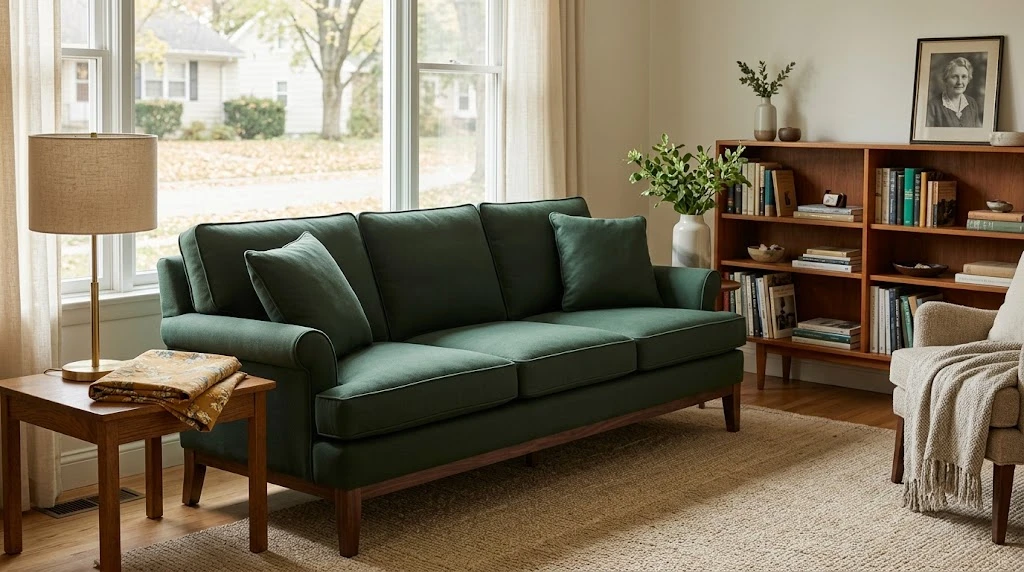
Nobody prepares you for the emotional weight of dead people’s furniture.
It shows up in a moving truck or sits waiting after the estate is settled. A large, well-built sofa in a pattern that doesn’t belong in your home. You didn’t pick it. You can’t return it. Throwing it away makes you feel like a terrible person.
So you keep it. You rearrange your living room around a piece you never wanted. You cover it with blankets that slide off every time someone sits down.
The guilt is understandable, but it’s solving the wrong problem. What you actually need is a way to make the sofa yours without erasing why it matters.
Look Past the Surface
Most people evaluate furniture based on appearance. With inherited pieces, that’s a mistake.
The upholstery — the foam, fabric, batting, and cushion inserts — is what ages visibly. It sags, fades, pills, and goes stiff. But underneath all of that sits a frame that was likely built to outlast several rounds of fabric.
Furniture produced thirty or forty years ago used solid hardwood, proper joinery, and real spring systems. Mass-produced modern equivalents often substitute engineered board and staples. The older construction philosophy prioritized longevity over manufacturing speed.
Before you make any decisions, give the frame a physical test. Push the arms and press the back. Lift one corner and see how much the opposite leg stays grounded. A sturdy frame with minor wear is worth saving.
A well-built skeleton is genuinely difficult to source today at moderate price points. Keeping what you already have sidesteps that search entirely.
Understanding the Process
This work is structural, not decorative. That distinction matters when setting expectations.
The piece gets stripped completely. Every layer of fabric, every piece of batting, every cushion comes off until only bare wood remains. A technician inspects every joint and re-glues or re-secures anything loose. Springs get re-tied and webbing gets replaced where it has stretched or torn.
From there, new foam fills the cushions, fresh batting wraps the frame, and hand-fitted fabric covers the whole structure. Sofa reupholstery follows a strict sequence because each step supports the next. Rushing produces visible flaws within weeks.
The timeline reflects the labor involved. A complete project typically takes several weeks in a busy workshop. That duration is normal, not a sign of inefficiency.
You’re essentially getting two outcomes at once: mechanical restoration below the surface and a visual transformation above it. Both contribute to how the piece feels when you sit down every evening.
Fabric Changes Everything
If the frame is the skeleton, the fabric is the face. It’s what you and everyone else sees first.
Choosing it wisely is the single most impactful decision in this entire process. A dark, heavy tapestry replaced with soft dove-gray cotton turns a formal relic into an everyday favorite. Same frame, opposite impression.
Three areas deserve your attention before you commit to any material.
Durability under pressure. Homes with pets, children, or heavy daily use need textiles that resist abrasion. Look at double rub counts — a metric the industry uses to measure wear resistance. Numbers above 25,000 to 30,000 serve well in active households.
Color in your actual space. Swatches behave differently under store fluorescents than beside your own windows. Tape samples to the piece and check them morning and evening. Texture matters as well, since you’ll feel it every time you sit down.
Scale of any pattern. A plaid or stripe that looks restrained on a small sample can dominate a full-length sofa. Ask the craftsperson how the pattern will align at seams and cushion breaks. Proper matching takes skill and will influence the estimate.
Experienced professionals offering sofa reupholstery guidance can prevent costly mistakes at this stage. They know which textiles endure and which fail under real household conditions. Listening to them early saves money and frustration later.
One financial reality worth noting: good fabric is expensive. A three-seat sofa can require fifteen to eighteen yards or more. Set a per-yard ceiling before you begin browsing, or the total will escalate beyond your plan.
Design Tweaks You Can Make Along the Way
A stripped frame offers room for adjustments that go well beyond fabric selection. Small revisions can shift the entire visual direction.
Removing a skirt and exposing the legs gives the piece an airier feel. Replacing short, blocky legs with tapered ones changes the silhouette dramatically. Swapping three separate seat cushions for a single bench cushion introduces a modern edge.
Piping, nailhead trim, and tufted buttons can all be added or removed during the rebuild. Professional sofa upholstery services handle these modifications as a routine part of the process. None require altering the frame’s core structure.
Think of each change as a conversation between your taste and the furniture’s history. You’re not erasing the past — you’re translating it into a language that fits your home. The result is a piece that feels curated rather than inherited.
What Drives the Cost
People want a simple answer to the price question. The honest answer is that it varies.
Labor is the dominant expense. A standard sofa demands twenty to forty hours of skilled handwork. Quotations from sofa upholstery services generally break down into three categories: labor hours, fabric yardage, and any structural or cushion repairs.
The investment makes strong sense when the frame is solidly built and perfectly scaled for your room. It also makes sense when the piece holds sentimental value — which inherited furniture almost always does.
The case weakens when the original construction was cheap or the frame shows serious damage. If the total approaches the cost of a high-quality new sofa, the comparison deserves honest scrutiny. Always request at least two or three quotes, since regional pricing can differ significantly.
A trustworthy professional will tell you plainly when a project is not worth pursuing. That kind of honesty is the most reliable indicator of a shop worth trusting.
Selecting the Right Workshop
The craftsperson you choose determines the outcome as much as any material decision you make.
Referrals remain the most dependable way to find quality shops. Ask friends who have had furniture reworked. Speak with local designers or visit a fabric store and ask which upholsterers customers trust most.
During your search, request photographs of completed work — especially pieces with similar shapes or styles. Confirm the shop handles frame repair and foam replacement rather than simply stretching new fabric over old padding. A detailed written estimate should list labor, materials, yardage, pickup, and delivery.
Workshops that provide fabric yardage numbers demonstrate transparency and allow you to source material independently. Shops that ask about sunlight, pets, and daily habits are thinking about how the piece will age. Both qualities signal professionalism worth prioritizing.
Expect a meaningful wait. Well-regarded workshops carry full schedules because careful work resists compression. If someone can begin immediately, it is worth asking why their calendar is empty.
What Stays and What Changes
Decades of family life are embedded in that frame — meals shared, naps taken, conversations held. The wood remembers what the fabric cannot.
You chose new colors, new textures, and new details. The object your family loved remains in active use. It belongs to your daily life now, not just your conscience.
Someday someone will inherit it again and face the same choice. They’ll keep what matters and change what doesn’t. That cycle is the entire point.
Comments
No comments yet. Be the first to react!