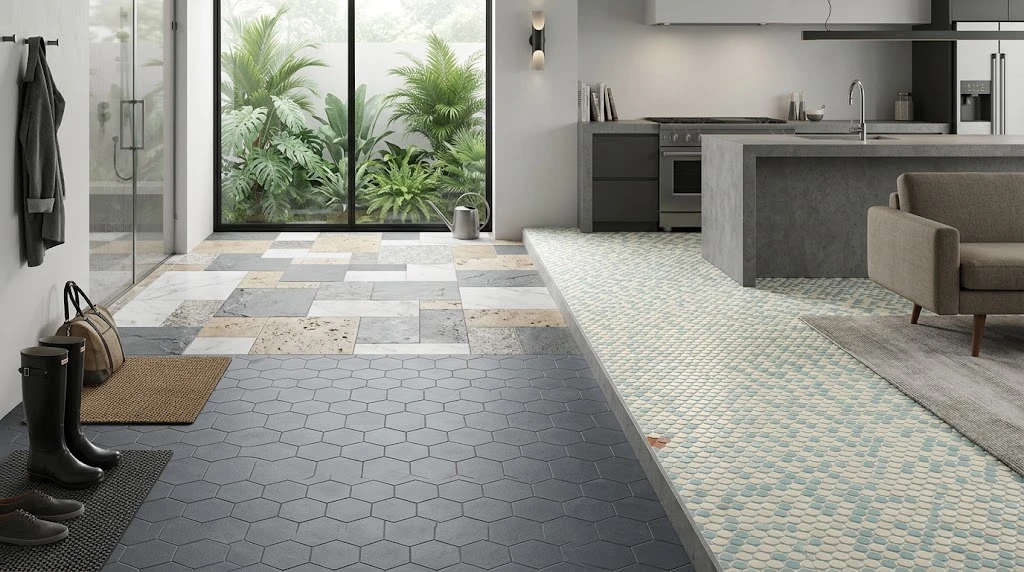
Finding mosaic floor tiles that look stunning and last for years is no simple task. Your flooring faces daily assaults that test its limits. When you browse the showroom of a tile shop in Singapore, dazzling displays naturally pull your focus toward color and design. Yet resilience matters just as much as beauty. Foot traffic, dropped items, spilled liquids, and tracked-in debris all wear surfaces down over time. This article examines three common mosaic materials: porcelain, ceramic, and stone. We will ignore promotional claims and concentrate on what truly counts: how well each material holds up under real-world conditions.
Porcelain: The Heavy Hitter
Start with the most durable choice. Porcelain is technically a ceramic, but its production creates far greater density. Factories fire porcelain at extremely high temperatures. This process drives out almost all moisture from the clay. What remains is an exceptionally hard, compact material.
For areas needing mosaic floor tiles that can handle constant use—busy entryways, active kitchens—porcelain offers solid reliability. Few materials resist foot traffic as well. Scratches rarely penetrate its surface. Drop a heavy cast-iron pan, and the tile will likely survive intact.
Water resistance is another key strength. In humid climates, this feature is crucial. Moisture cannot easily seep into the dense body. Bathrooms and mudrooms become safe choices for installation. Even standing water will not cause absorption or damage.
Through-body coloring adds a hidden benefit. Many porcelain tiles have the same color running all the way through. If a chip occurs, the exposed area matches the surface. The flaw becomes nearly invisible. This trait greatly extends the visual life of the floor. Small damage never requires replacement.
The main drawback is cutting difficulty. Rooms with odd angles or curved edges need more installation time. A diamond-tipped saw is necessary equipment. Once installed, however, porcelain is nearly impossible to destroy.
Ceramic: The Budget-Friendly Option
Standard ceramic comes next. These tiles are lighter and slightly more porous than porcelain. They are fired at lower temperatures. Floor performance depends largely on the glaze.
The clay body is softer. The glaze baked on top provides the real protection. A good glaze resists scratches and stains well. But that glaze is the only barrier shielding the soft clay beneath. A heavy impact can crack the surface.
When ceramic mosaics chip, the raw clay shows through. Usually terracotta red or bright white, this base stands out sharply against the glazed top. A chipped ceramic tile looks genuinely broken. You will probably need to replace it to keep the floor looking good.
Because of this weakness, ceramic suits low-traffic floors best. Guest bathrooms, powder rooms, and quiet hallways work well. It is not ideal for main entryways or busy kitchens.
Ceramic has clear practical benefits. It cuts and drills more easily than porcelain. Floors with many pipes or curves are simpler to tile with ceramic. It is also usually cheaper. For large spaces on a tight budget, ceramic is an appealing choice. Just plan to handle it with extra care.
Stone: Natural Beauty with Maintenance Demands
Stone mosaics are a completely different category. They come from nature, not factory molds. Every piece is one of a kind. Natural color shifts that no manufactured tile can copy appear organically. Marble, travertine, slate, and granite are common picks.
Durability varies hugely by stone type. Granite is extremely tough. It resists scratches and chips better than most other floor materials. Slate is also strong, and its natural texture provides slip resistance.
Marble is a different story. It is softer than expected. It scratches easily. It also reacts to acids. Spill lemon juice, wine, or some cleaners on marble, and it will etch. Etching leaves a dull mark that will not go away. Travertine has natural holes filled during production, but these fillers can pop out over time under heavy use.
The biggest problem with all natural stone is porosity. Unsealed stone soaks up water and stains fast. Spill a drop of coffee on unsealed marble, and it sinks in right away. The stain becomes permanent.
You must seal stone mosaics before use. You also need to reseal them every year, sometimes more often. This adds a lot of maintenance to your routine. If you seal properly and clean spills right away, stone lasts a long time. If you want a floor you can ignore, natural stone is not the answer.
The Local Climate Factor
Where you live affects your choice. When you visit a tile shop in Singapore, think about local conditions. Humidity is constant here. Kitchens and bathrooms stay damp.
Porcelain handles this moisture with ease. You can mop it, spill on it, and use strong cleaners. It will not warp, rot, or grow mold. Ceramic works fine too, as long as the grout lines stay sealed. The tile itself handles humidity, but you need to watch the grout.
Stone needs more thought in a tropical climate. Constant dampness wears down the protective sealer faster than in dry areas. Also, wet stone is surprisingly slippery. If you are tiling a bathroom floor or outdoor patio, slip resistance is critical. Polished marble becomes dangerous when wet. Slate or textured porcelain gives much better grip.
Ask yourself how much upkeep you are willing to do. In a humid city, low-maintenance materials usually win. Most people do not want to spend weekends resealing a bathroom floor.
Grout Matters Too
When discussing mosaic floor tiles, grout cannot be ignored. Mosaics have more grout lines than large-format tiles. Those tiny grout lines are usually the first thing to fail. Grout is porous. It soaks up water, dirt, and bacteria.
No matter which material you pick, you need to seal the grout. Epoxy grout is excellent for mosaics. It is fully waterproof and stain-proof. It is harder to install, but it protects your floor long-term. If grout fails, water gets under the tiles. Once water gets underneath, the floor is ruined, whether you used porcelain, ceramic, or stone.
Making the Choice
Let us break it down simply.
Pick porcelain if you want the most durability. It handles heavy traffic, resists water, and hides chips well. It is the workhorse of floor mosaics. Use it in kitchens, entryways, and bathrooms.
Pick ceramic if you are on a tight budget or covering a low-traffic floor. Just be ready for possible chipping. Keep a few extra tiles from the original batch for replacements later.
Pick stone if you want unmatched natural beauty and do not mind the extra work. You will need to seal it and clean spills immediately. Do not use soft stones like marble in a busy kitchen. Save them for areas where looks matter more than toughness.
There is no single right answer. It depends on where the floor goes and how you live. The best material balances your taste with your tolerance for upkeep. Look at samples. Feel the texture. Ask about the PEI rating, which tells you how hard the tile surface is. Then choose with confidence.
Comments
No comments yet. Be the first to react!